Luxury Hotels Atlas / Places / Portugal / Sintra / Valverde Sintra
Valverde Sintra
Sintra, Portugal · Valverde · Grand Luxury
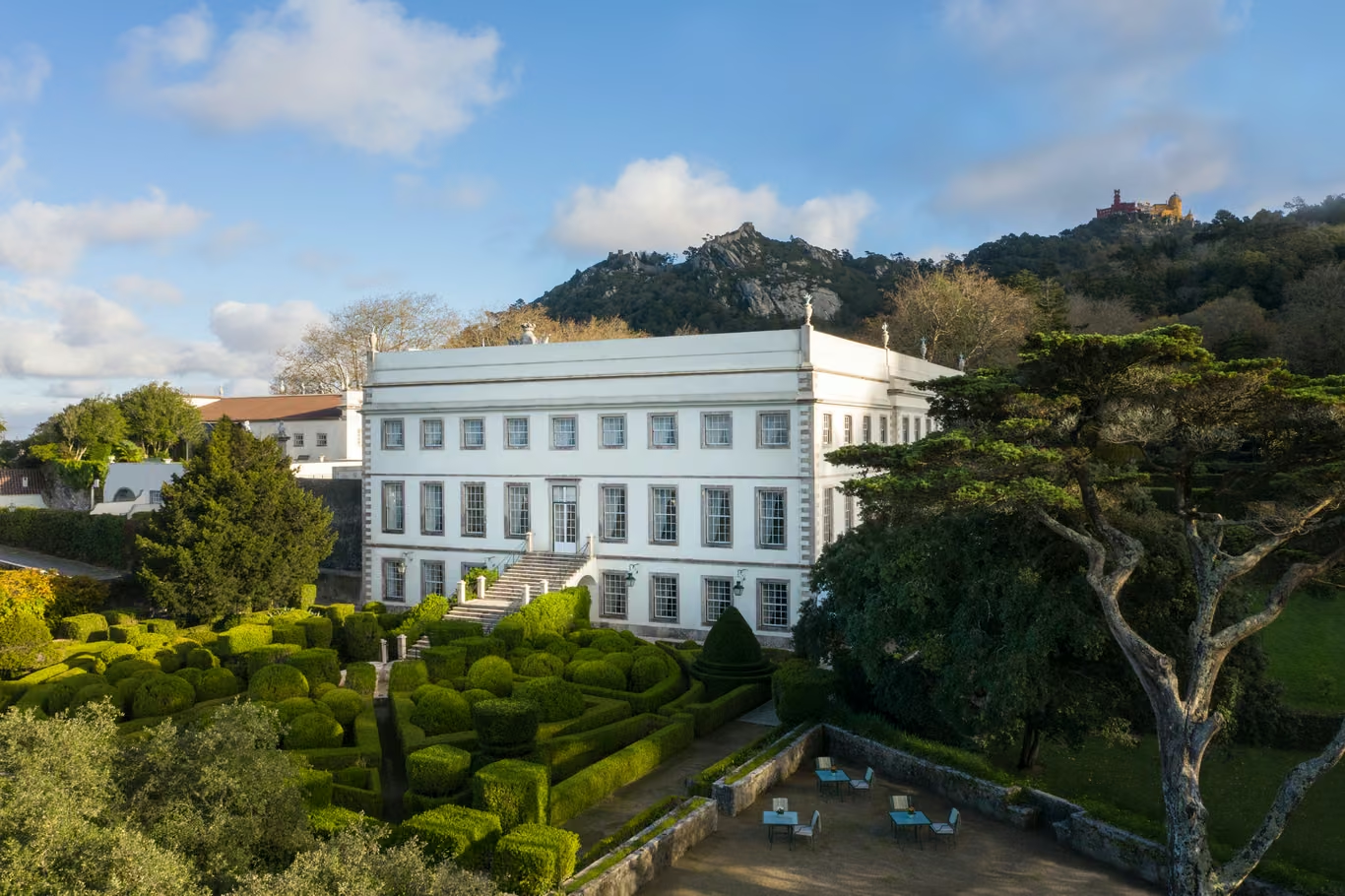
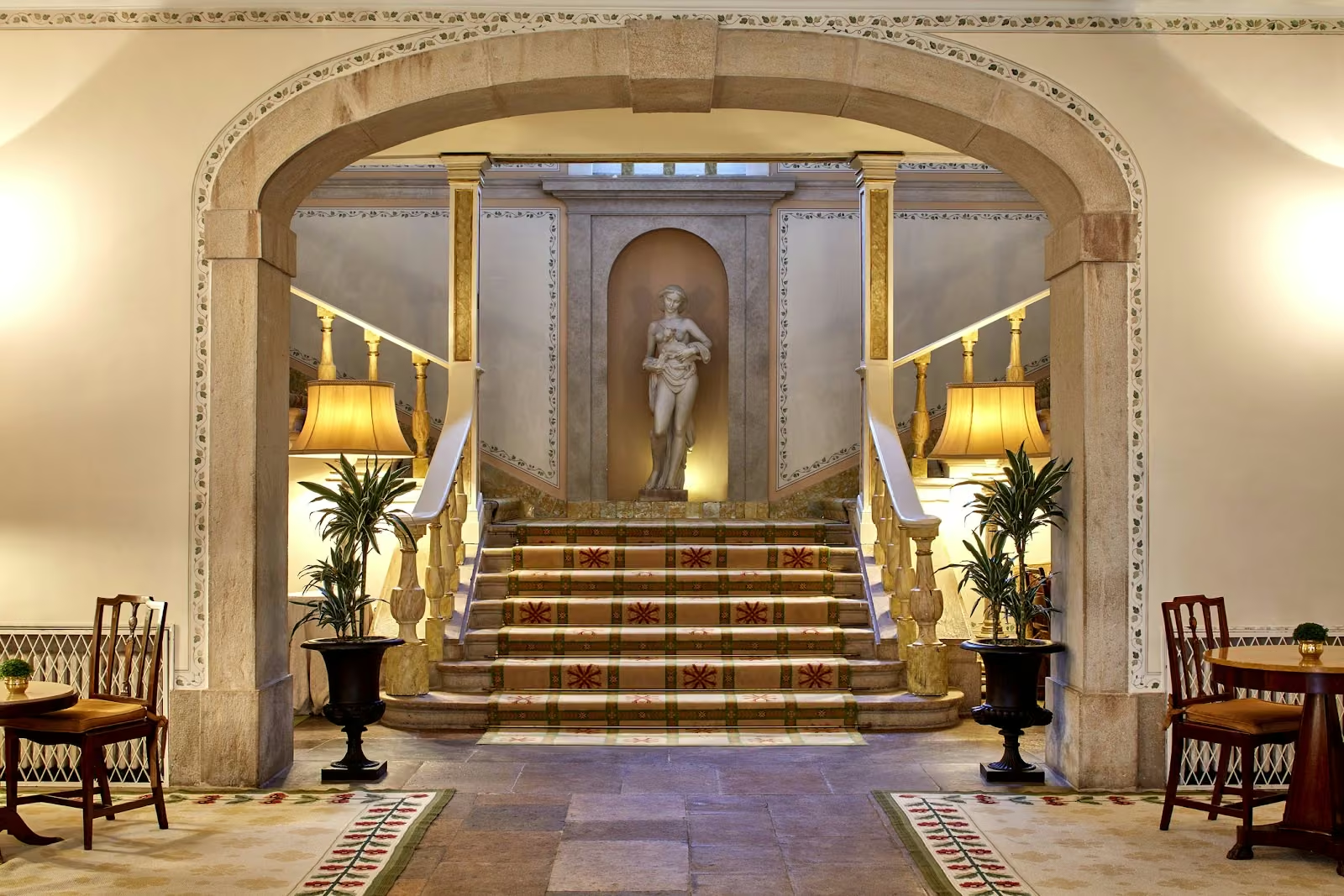
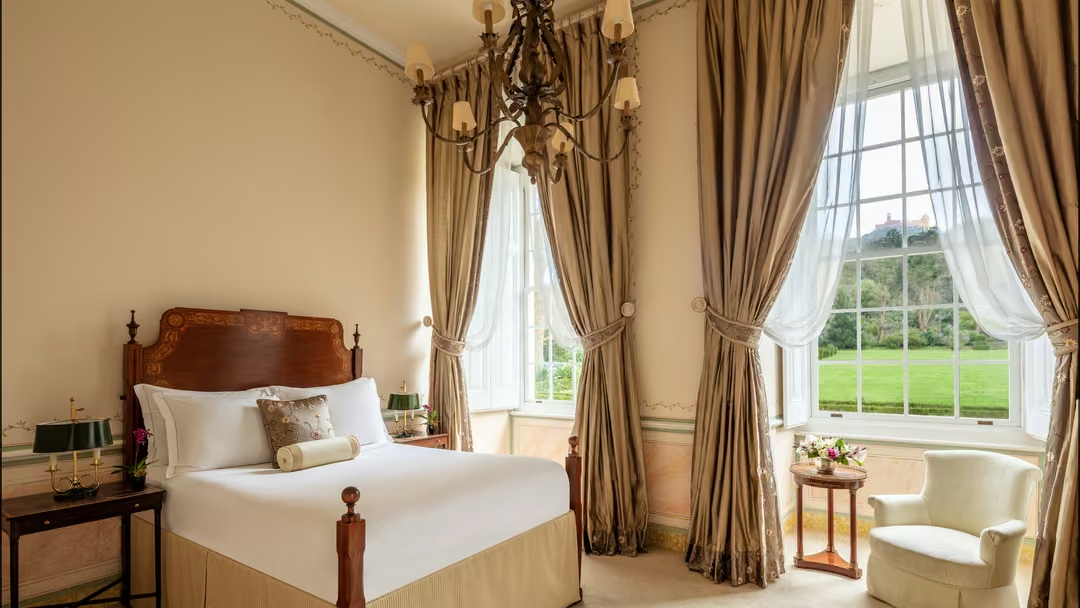
A Dutch consul named Daniel Gildemeester built this house in the hills of Sintra between 1783 and 1787 to spend the rest of his life looking at the view. He got six years. The 5th Marquis of Marialva then doubled it, threw the parties that drew half the European aristocracy up the mountain, and in 1802 joined the two wings with a triumphal arch carrying bronze portraits of the prince regent and Carlota Joaquina. Jean-Baptiste Pillement painted invented botany, mermaids and mythological figures on the walls inside. It has been a hotel since 1955 and a Valverde one since New Year's Day 2024: thirty rooms in a UNESCO landscape.
- 30 rooms
- Opened 1955
- Neighborhood: Sintra historic centre
- Architect: Raul Lino (1955 hotel conversion)
About Valverde Sintra
- Seteais is usually read as seven sighs, and nobody agrees why. One story blames Portuguese fury at the 1808 Convention of Sintra, another counts seven echoes off the hillside, a third says it was simply centeais, the rye fields that were here first.
- Abandoned for well over a century, the palace was bought by the Portuguese state in 1946 and converted by the architect Raul Lino. The Hotel Palacio de Seteais opened on 29 September 1955.
- Valverde won the first international public tender for the concession and took over on 1 January 2024, ending 68 years under the Tivoli name, with 22 million euros committed to the building and gardens across a thirty-year term.
- The palace is a protected national monument and sits inside the Cultural Landscape of Sintra, inscribed by UNESCO in 1995.
History
Seteais was born as Quinta da Alegria, built between 1783 and 1787 for Daniel Gildemeester (1717-1793), a wealthy merchant and Dutch consul in Portugal, on land granted under the authority of the Marquis of Pombal. Gildemeester wanted to spend the rest of his life looking at the Sintra hills and managed six years of it before he died.
In 1797 his widow sold the house to Diogo Jose Vito de Menezes Noronha Coutinho, 5th Marquis of Marialva, and the palace entered its golden period. Marialva doubled the building between 1801 and 1802, probably to designs by Jose da Costa e Silva, the neoclassical architect of the Sao Carlos theatre in Lisbon, turning it into a symmetrical U with the consul's house as one wing. The cornice was dressed with vases, busts and garlands, the gardens were remade in the romantic taste, and the whole of aristocratic Europe came up the hill for the festivities. In 1802 the old and new wings were linked by a monumental arch honouring a visit by Prince Regent John and Princess Carlota Joaquina, carrying their bronze effigies and a Latin inscription, and attributed to the architect Francisco Leal Garcia. Several interiors were painted at about this time with frescoes attributed to the French artist Jean-Baptiste Pillement (1728-1808) and his circle: imaginary vegetation, mythological figures, mermen and mermaids.
After Marialva's death in 1803 the palace passed through hands and fell into neglect. The Portuguese state acquired it in 1946 and classified it as a monument of public interest in 1947; the Ministry of Public Works approved its adaptation to a hotel in 1952, and the architect Raul Lino (1879-1974) carried out the conversion. The Hotel Palacio de Seteais opened on 29 September 1955 under the Tivoli banner, which it carried for 68 years. In November 2023 the Valverde group won the first international public tender for the operating concession, and the change took effect on 1 January 2024. Valverde has committed 22 million euros to the conservation of the building and gardens over the thirty-year term. The palace holds 30 rooms, among them three suites, and is a member of The Leading Hotels of the World.
The setting
The palace sits on Rua Barbosa du Bocage on the slope above Sintra town, inside the Cultural Landscape of Sintra that UNESCO inscribed in 1995 as the first European site listed in that category. Sintra was the summer retreat of Portuguese kings for six centuries, and the hillside around the hotel is dense with the results: the Sintra National Palace with its conical kitchen chimneys is about a kilometre downhill, the ruined Moorish castle on the ridge roughly four, and Pena Palace, Monserrate and the Quinta da Regaleira are all within a short drive. Lord Byron came through in 1809 and put Sintra into Childe Harold's Pilgrimage, which did more for the town's reputation abroad than any of its kings. The Atlantic at Cabo da Roca, the westernmost point of mainland Europe, is twenty minutes west; Estoril and its casino about thirteen kilometres south.
Restaurants and bars
- Restaurante Palácio de Seteais — Restaurant · Fine dining
Open Valverde Sintra in the atlas for live weekend rates, photos, and the full folio.
More hotels in Sintra
- Penha Longa Resort, a Ritz-Carlton Hotel — Ritz-Carlton · Grand Luxury
- Tivoli Palacio de Seteais — Tivoli Hotels · Core Luxury
- Lawrence's Hotel — Independent · Accessible Luxury
- Sintra Marmoris Palace — Marmòris · Accessible Luxury