Luxury Hotels Atlas / Places / Portugal / Sintra / Tivoli Palacio de Seteais
Tivoli Palacio de Seteais
Sintra, Portugal · Tivoli Hotels · Core Luxury
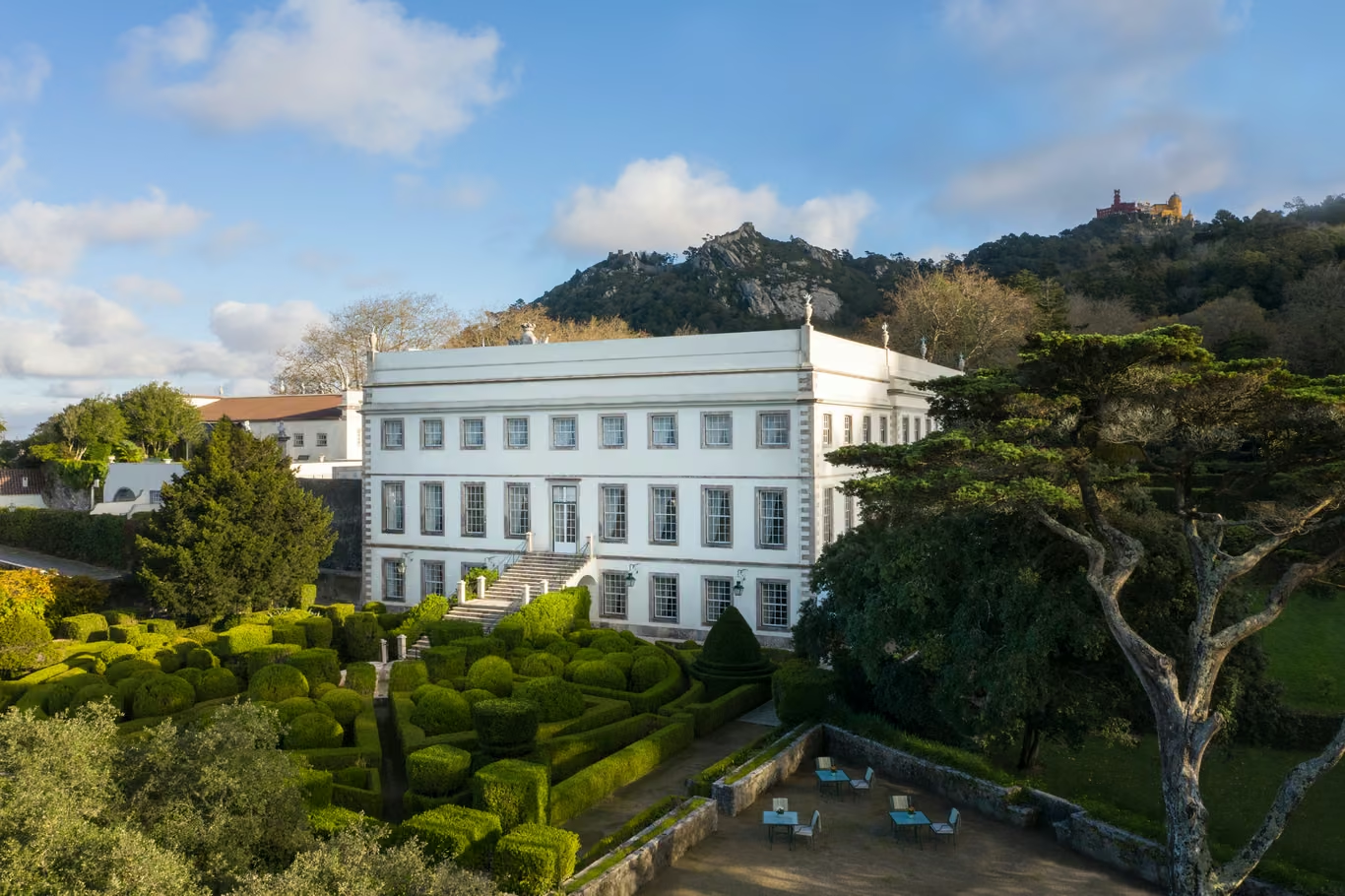
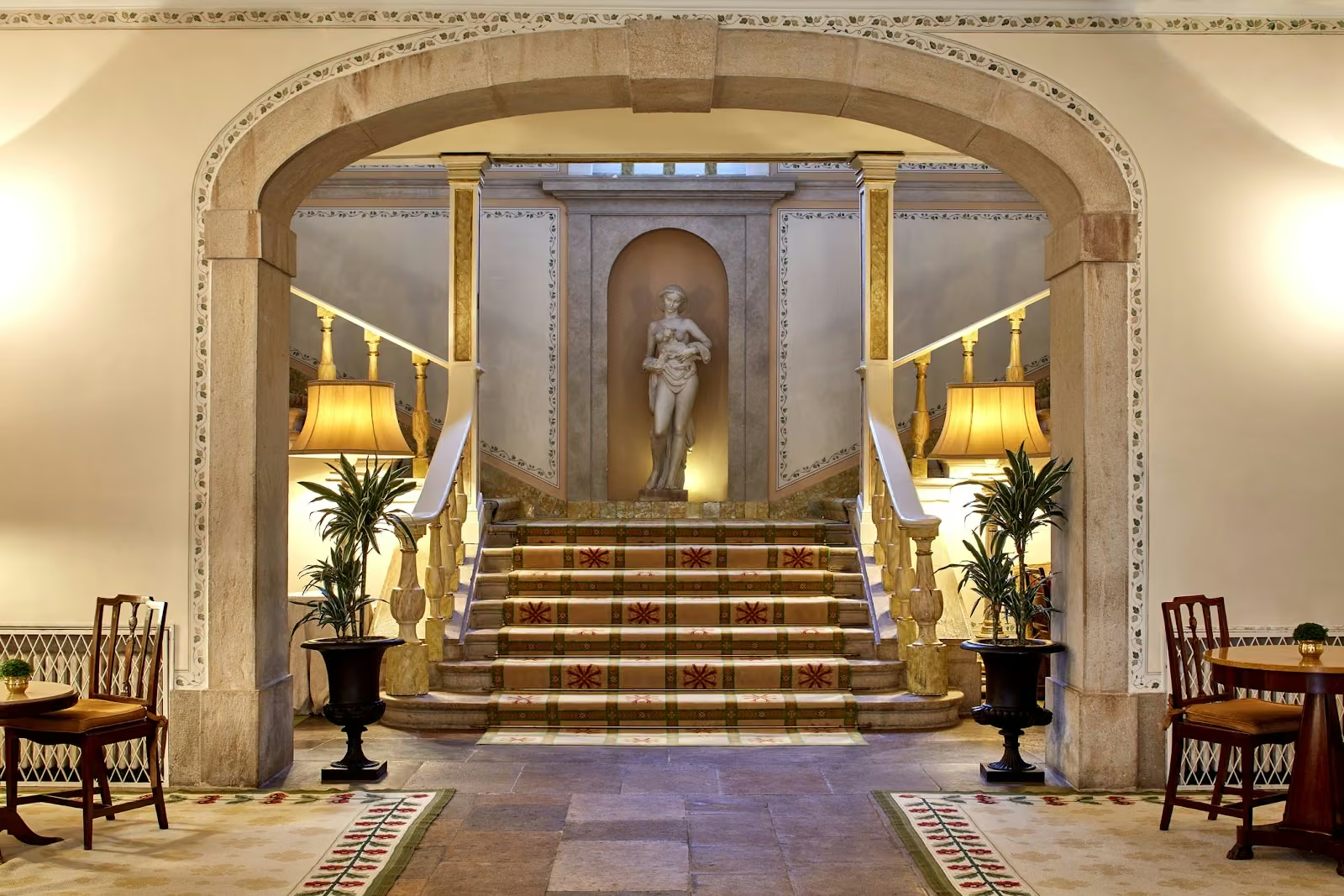
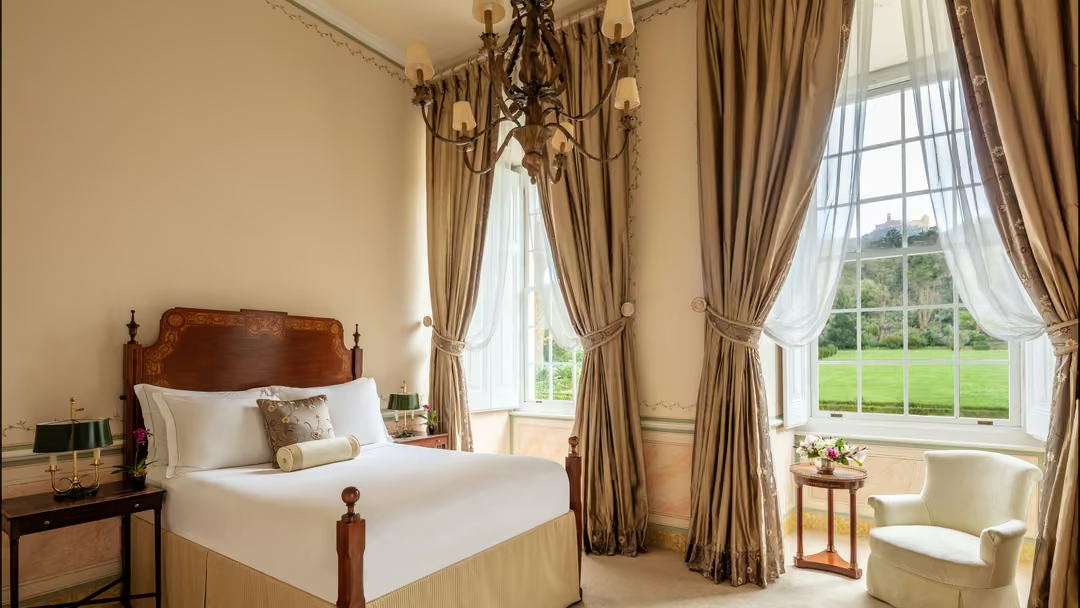
Palácio de Seteais began as an 18th-century villa built between 1783 and 1787 in the hills of Sintra for Dutch consul Daniel Gildemeester, on land granted by the Marquis of Pombal. After Gildemeester's death his widow sold the house in 1797 to the 5th Marquis of Marialva, who enlarged it into a formal, symmetrical residence in 1801-1802, an expansion generally attributed to neoclassical architect José da Costa e Silva. The ceremonial arch linking its two wings, completed in 1802 by Francisco Leal Garcia, honored Prince Regent John and Princess Carlota Joaquina. The Portuguese government acquired the palace in 1946 and opened it as a hotel in 1954, and it is now protected as a National Monument within the UNESCO Cultural Landscape of Sintra, standing in visual dialogue with the Moorish Castle and Pena Palace.
- Opened 1954
- Neighborhood: Seteais
About Tivoli Palacio de Seteais
- Interior frescoes in the ceremonial arch are attributed to Jean-Baptiste Pillement.
- The Portuguese government acquired the palace in 1946 and it opened as a hotel in 1954, preserving its role as a lived-in historic house rather than a museum.
- Lord Byron called Sintra a glorious Eden; Quinta da Regaleira is a six-minute walk from the hotel at the heart of the palace circuit.
History
Palácio de Seteais began life as an 18th-century aristocratic villa in the hills of Sintra, built between 1783 and 1787 for the Dutch consul Daniel Gildemeester on land granted by the Marquis of Pombal. The original house was later transformed rather than replaced: after Gildemeester’s death, his widow sold it in 1797 to Diogo José Vito de Menezes Noronha Coutinho, 5th Marquis of Marialva, and the property was enlarged into a more formal, symmetrical residence in 1801–1802. That expansion is generally attributed to the neoclassical architect José da Costa e Silva, while the ceremonial arch linking the two wings, completed in 1802, is credited to Francisco Leal Garcia and was made to honor Prince Regent John and Princess Carlota Joaquina.
Seteais remained part of Portugal’s elite private world until the 20th century. The Portuguese government acquired the palace in 1946, and it opened as a hotel in 1954, preserving its role as a lived-in historic house rather than a museum piece. The building is now protected as a Portuguese National Monument and forms part of the UNESCO Cultural Landscape of Sintra, one of the country’s most important heritage settings. Its location gives the property a direct visual relationship with the palaces and ruins that define Sintra’s romantic skyline, from the Moorish Castle to Pena Palace.
Today, Palácio de Seteais is valued less for any single architectural flourish than for the way it concentrates several eras of Portuguese taste in one address: Enlightenment-era villa, early 19th-century neoclassical enlargement, royal association, and postwar hotel conversion. The result is a house history that is inseparable from Sintra itself.
The setting
Tivoli Palácio de Seteais occupies a Neoclassical palace at Rua Barbosa du Bocage 8, on the edge of Sintra's UNESCO World Heritage Cultural Landscape — terrain Lord Byron called a "glorious Eden." Built around 1787 for Dutch consul Daniel Gildemeester, the palace was enlarged by the 5th Marquis of Marialva; a triumphal arch was added in 1802 to honour Prince Regent João VI, with interior frescoes attributed to French painter Jean-Baptiste Pillement. The mystical Quinta da Regaleira is a six-minute walk, the Regaleira Tower 11 minutes on foot, and the Initiation Well 14 minutes away — placing the hotel at the heart of Sintra's palace circuit, where Portuguese Romanticism and aristocratic grandeur are encountered at every turn. 3.9 km from Castle of the Moors. 13 km from Casino Estoril.
Awards
- Historic Hotels Worldwide member
Open Tivoli Palacio de Seteais in the atlas for live weekend rates, photos, and the full folio.
More Tivoli Hotels hotels
- Tivoli Avenida Liberdade Lisboa — Lisbon, Portugal · Core Luxury
- Tivoli Carvoeiro Algarve Resort — Carvoeiro, Portugal · Core Luxury
- Tivoli Kopke Porto Gaia Hotel — Porto, Portugal · Accessible Luxury
- Tivoli Doelen Amsterdam — Amsterdam, Netherlands · High Luxury
- Tivoli Mofarrej São Paulo — São Paulo, Brazil · High Luxury
- Tivoli Ecoresort Praia do Forte — Praia do Forte, Brazil · Core Luxury
More hotels in Sintra
- Lawrence's Hotel — Independent · Accessible Luxury
- Sintra Marmoris Palace — Marmòris · Accessible Luxury
- Penha Longa Resort, a Ritz-Carlton Hotel — Ritz-Carlton · Grand Luxury
- Valverde Sintra — Valverde · Grand Luxury
Tivoli Hotels in The Maison: the brand's idea, history and every house on the atlas.