Luxury Hotels Atlas / Places / United States / Houston / JW Marriott Houston Downtown
JW Marriott Houston Downtown
Houston, Texas, United States · JW Marriott · Core Luxury
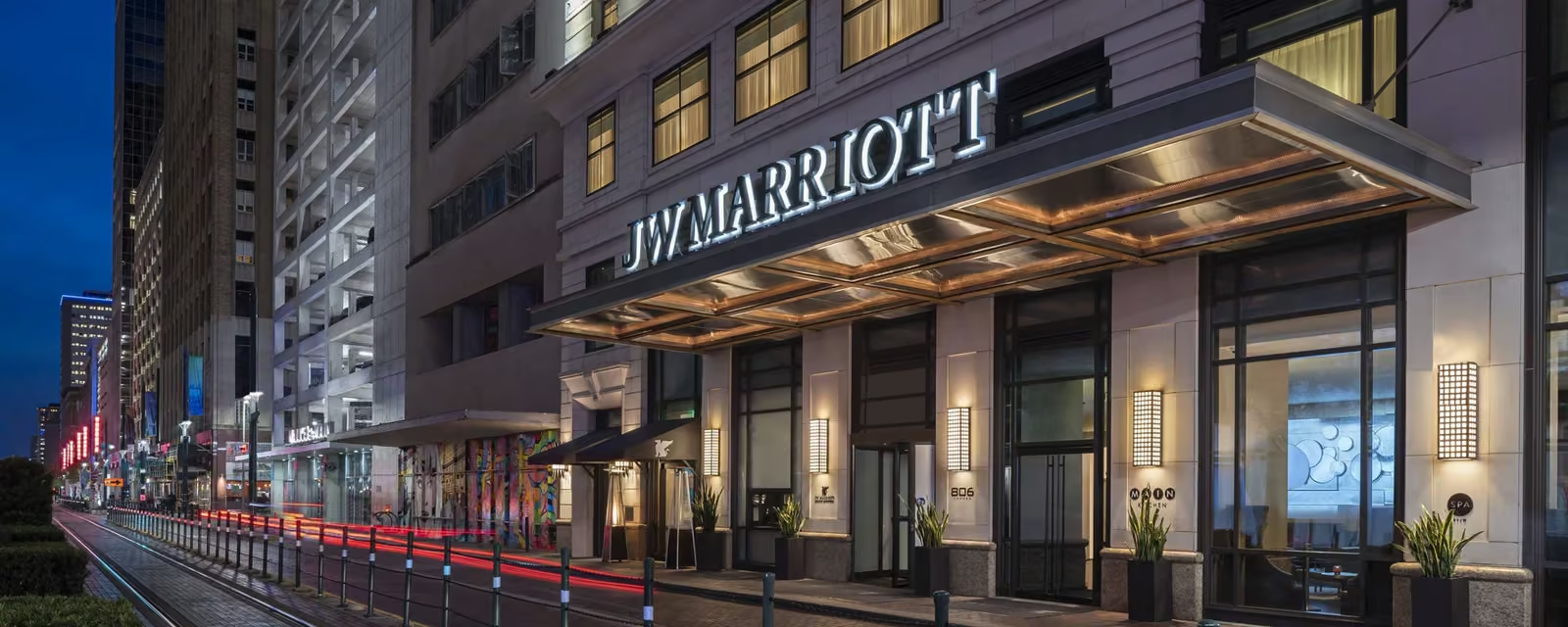
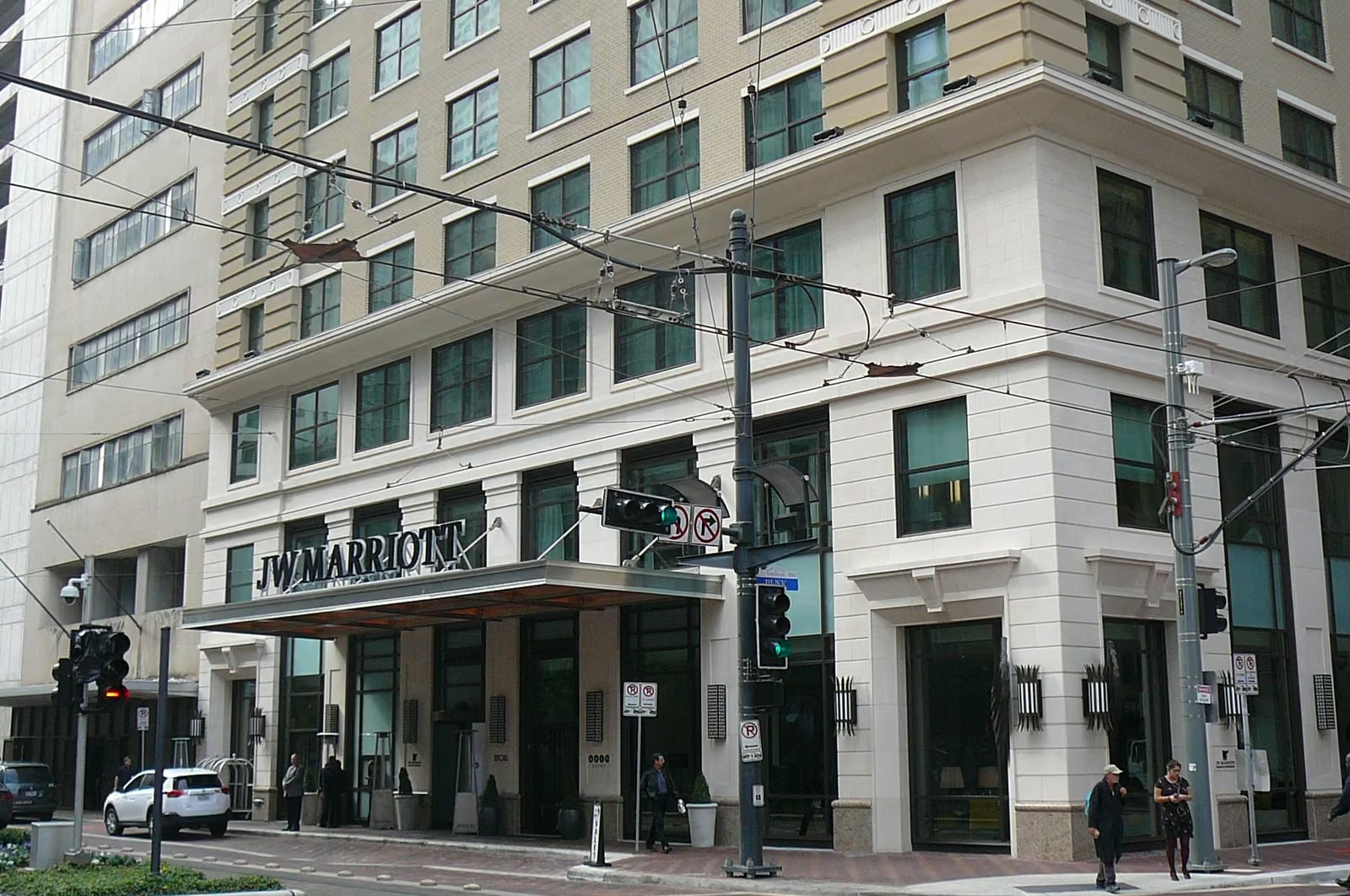
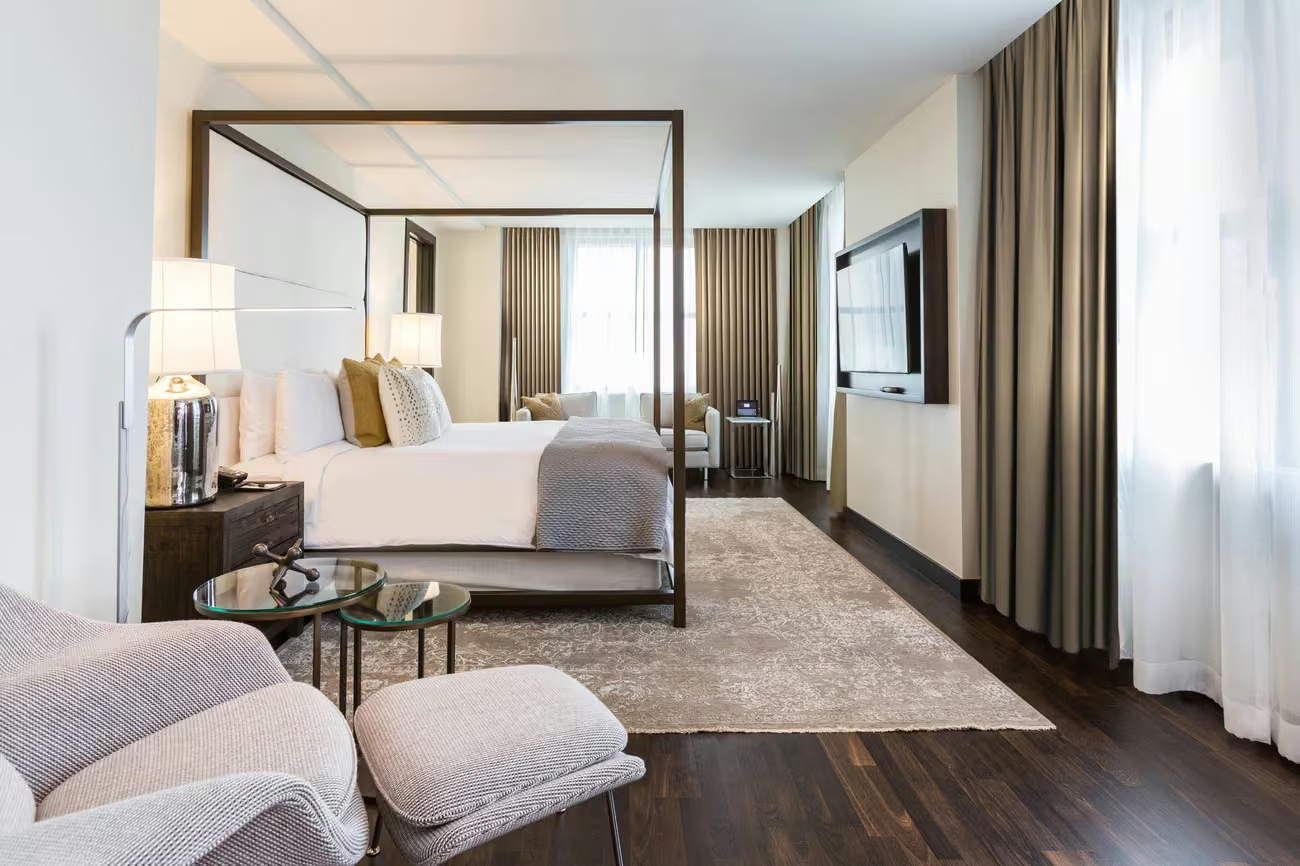
Houstonians nicknamed Samuel Fain Carter's 1910 tower Carter's Folly: sixteen floors of steel frame on swampy ground, the tallest building in Texas, every floor finished in Italian and Norwegian marble. A 1969 glass-and-marble slipcover hid it for four decades until an $80 million restoration, opened as JW Marriott on 19 November 2014, won the Driehaus Preservation Award the next year.
- 384 rooms
- Opened 2014
- Neighborhood: Theater District
- Rooms from 280 sq ft (26 m²)
About JW Marriott Houston Downtown
- When Samuel Fain Carter announced this sixteen-floor tower in 1909, skeptics nicknamed it Carter's Folly, doubting a building so tall could stand on Houston's swampy ground.
- The Carter Building opened in 1910 as the tallest building in Texas and Houston's first steel-frame skyscraper, with every floor finished in Italian and Norwegian marble.
- A 1969 modernization encased the original façade in glass and marble panels for four decades before a $80 million restoration stripped the slipcover away.
- The beautifully restored 1929 Hedrick and Gottlieb boardroom on the second floor, commissioned by Second National Bank chairman John William Neal, became a signature event space.
- The JW Marriott Houston Downtown held its grand opening on November 19, 2014, winning the Driehaus Preservation Award the following year for returning the city's first skyscraper to its original dignity.
History
The building that stands at 806 Main Street in downtown Houston was once called Carter's Folly — and the nickname tells you something important about the ambitions of the man who built it and the skepticism of the city that watched him try. Samuel Fain Carter, founder of Lumberman's Bank in Houston, commissioned the Fort Worth architectural firm of Sanguinet and Staats to design a sixteen-floor, steel-framed office tower at the corner of Main and Rusk Streets. When Carter announced the project in 1909, with an estimated cost of $650,000, many Houstonians doubted that a building so tall could be structurally sound on Houston's famously unstable, swampy ground. Others doubted a commercial building located so far from Houston's established business core would ever prosper.
The Carter Building opened in 1910 as the tallest building in the state of Texas and the first steel-frame skyscraper in Houston. Every floor was finished in Italian and Norwegian marble. Electric lights, fans, and cold-water drinking fountains were installed throughout — amenities that were extraordinary for the era. Carter placed his own Lumberman's Bank offices on the sixteenth floor, though he kept the bank itself at its original Main Street location. The building's marble interiors, at a period when Houston was still largely a low-rise commercial city of brick and wood, announced that the city's financial class had arrived.
In 1923 Lumberman's Bank changed its name to Second National Bank of Houston, and Carter sold the building to the institution he had founded. The bank commissioned a six-story addition from Boston architects Thomas M. James Company, with assistance from Sanguinet, Staats, Hedrick and Gottlieb. By the late 1920s the building had become a prestigious address in the heart of Houston's intensifying downtown development. John William Neal assumed the chairmanship of Second National Bank in 1929 and commissioned Hedrick and Gottlieb to design an elaborate second-floor boardroom that became one of the most distinguished interior spaces in the city's commercial architecture. South Coast Life Insurance acquired the building in 1955 as the bank gradually withdrew. In 1969, a subsequent owner made the regrettable decision to modernize the building by encasing the original facade in glass and Georgian-marble panels — a slipcover that obscured the original architecture for four decades.
The building's rescue came in October 2009, when Pearl Real Estate of Fort Worth purchased the property for $3 million. Pearl Hospitality hired Gensler to manage the restoration and transformation, with design architecture from Jordan Mozer and Associates. The project cost exceeded $80 million, supported by $7.35 million from the City of Houston and $12 million from the Downtown Redevelopment Authority. The restoration removed the 1969 slipcover, restored the original ornamental details that had deteriorated or been removed, replaced the aluminum window and door frames with original materials, and exposed the hot-riveted steel columns that had been hidden behind later finishes. The beautifully restored 1929 boardroom on the second floor became a unique event space. The JW Marriott Houston Downtown held its grand opening on November 19, 2014, winning the Driehaus Preservation Award the following year for a project that increased the building's value more than twelve-fold while returning Houston's first skyscraper to something close to its original dignity.
The setting
JW Marriott Houston Downtown occupies the Samuel F. Carter Building at 806 Main Street, Houston's first skyscraper, a 22-story Beaux-Arts landmark completed in 1910 by Mauran, Russell and Crowell when oil prosperity was reshaping the city's skyline. The Main Street corridor retains its historic commercial grandeur, and guests access Houston's six-mile underground tunnel network directly from the lobby. Discovery Green is 12 minutes on foot, the Downtown Aquarium 13 minutes, and Daikin Park 14 minutes away, placing the hotel at the crossroads of the city's cultural, sports, and convention core. The Metro Rail's Main Street alignment runs directly past the entrance, extending reach to the Texas Medical Center and NRG Stadium. 3 miles from Houston Museum of Fine Arts.
Restaurants and bars
- The Foundry — Restaurant
Experiences
- Pet-friendly stay — Pets welcomed with a gourmet treat bag on arrival, pet rooms with bedding and bowls, and pet-friendly local recommendations.
- The Griffin Executive Lounge — Newly renovated executive lounge with skyline views, serving breakfast, refreshments, snacks and weekday hors d'oeuvres.
- The Perch — Restaurant serving plates rooted in local flavors and botanical-forward cocktails under shaded canopies with city views.
- Rooftop pool and bar — Rooftop pool and bar offered at the hotel, alongside a signature restaurant.
Amenities
- Spa
- Fitness center
- Pet-friendly
Awards
- AAA Four Diamond (2026)
Open JW Marriott Houston Downtown in the atlas for live weekend rates, photos, and the full folio.
More JW Marriott hotels
- JW Marriott Austin — Austin, United States · Core Luxury
- JW Marriott Charlotte — Charlotte, United States · Core Luxury
- JW Marriott Chicago — Chicago, United States · Core Luxury
- JW Marriott Clearwater Beach Resort & Spa — Clearwater, United States · Core Luxury
- JW Marriott Dallas Arts District — Dallas, United States · Core Luxury
- JW Marriott Grand Rapids — Grand Rapids, United States · Core Luxury
More hotels in Houston
- Hotel Daphne — Bunkhouse · Core Luxury
- Hotel Icon — Autograph Collection · Core Luxury
- Hotel Saint Augustine — Bunkhouse · Core Luxury
- Hotel ZaZa Houston Museum District — Hotel ZaZa · Core Luxury
- Hotel ZaZa Memorial City — Hotel ZaZa · Core Luxury
- InterContinental Houston — InterContinental · Core Luxury
JW Marriott in The Maison: the brand's idea, history and every house on the atlas.