Luxury Hotels Atlas / Places / United States / Santa Monica / The Georgian
The Georgian
Santa Monica, California, United States · Unbound Collection · Core Luxury
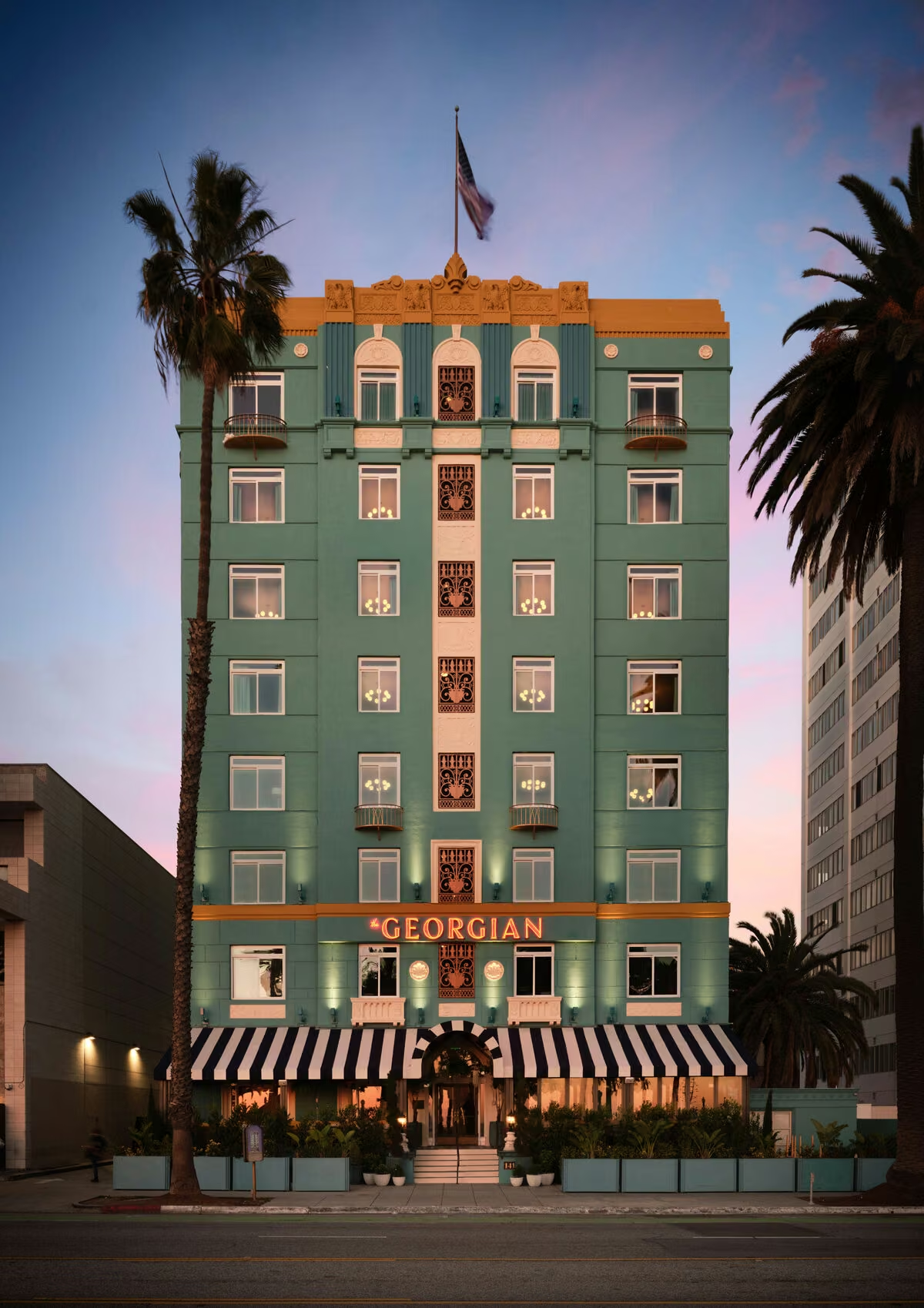
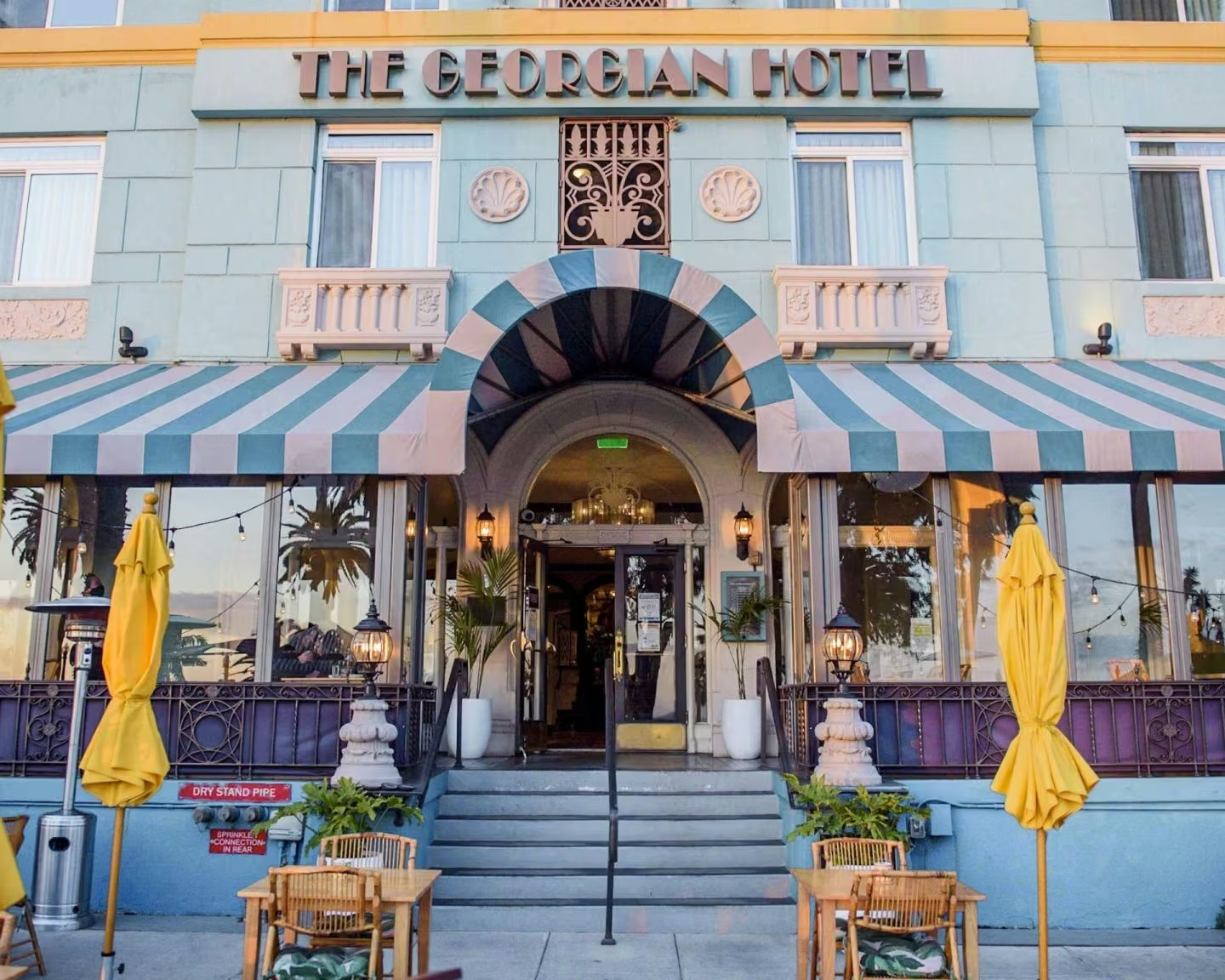
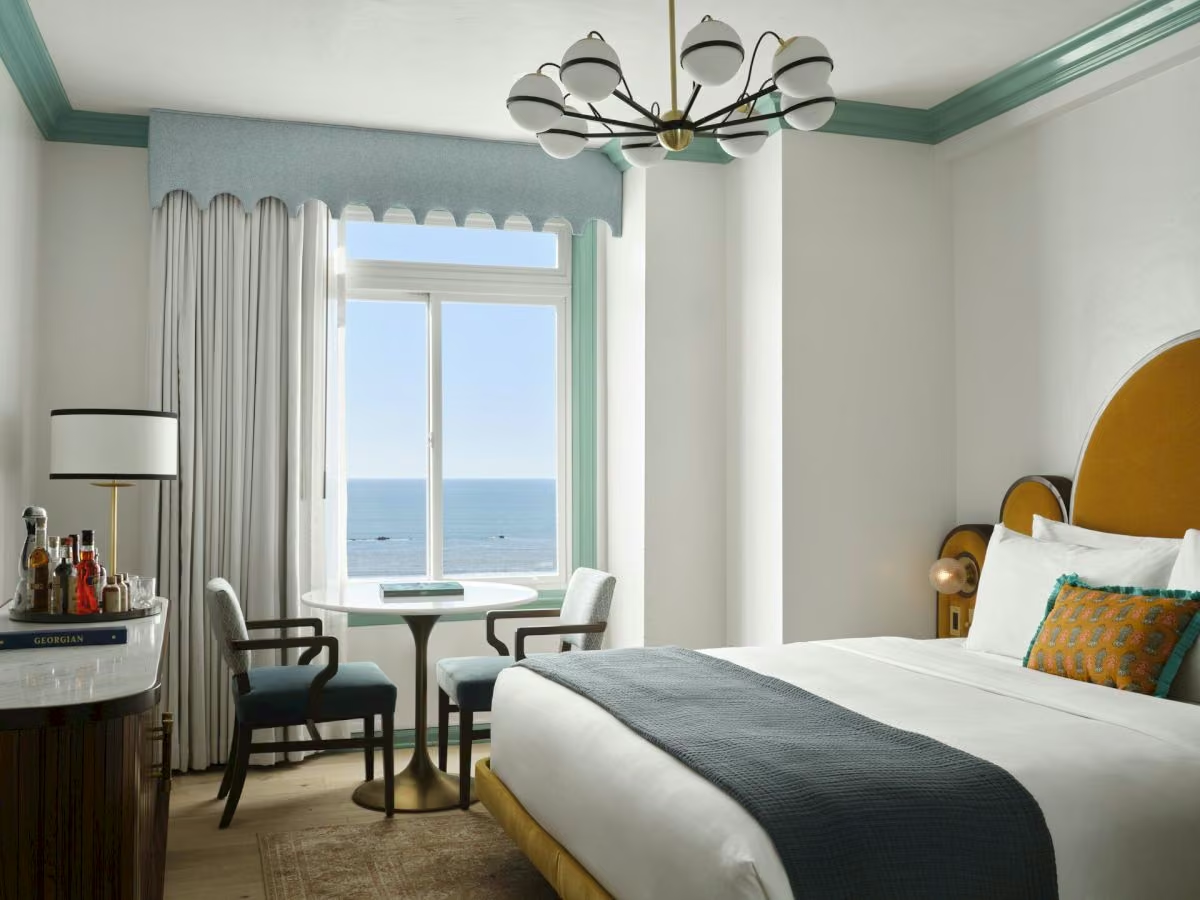
Rosamond Borde, one of the few women hoteliers in 1930s Los Angeles, hired architect M. Eugene Durfee to build this Art Deco tower on Ocean Avenue, opening it in 1933 with a basement speakeasy called the Griffin Room where Carole Lombard, Clark Gable and Bugsy Siegel drank through the final years of Prohibition. Reopened in 2023 after a restoration by Fettle Design, the speakeasy still bans photography and centers on a 1918 Steinway built into its rose marble bar.
- 84 rooms
- Opened 1933
- Neighborhood: Downtown Santa Monica
About The Georgian
- Small boats once ferried gamblers from the nearby Santa Monica Pier to offshore casino ships like the SS Rex, anchored just beyond what was then believed to be California's territorial waters.
- During World War II, women aircraft workers from the nearby Douglas Aircraft factory drank at the hotel bar after their shifts, sometimes still in coveralls with engine grease on their hands.
- The reopened Georgian Room speakeasy seats 65 guests and was restored using vintage photographs and archival materials supplied by the Santa Monica Conservancy.
History
The Georgian Hotel was commissioned in the early 1930s by Rosamond Borde, a pioneering California hotelier and one of very few women developers in Los Angeles at the time, who hired architect M. Eugene Durfee to design a grand hotel on Ocean Avenue in Santa Monica. The building permit records and the Santa Monica Conservancy date the construction to 1931, with the hotel opening in 1933. Durfee produced an eight-story structure in a distinctive blend of Art Deco and Romanesque Revival styles — when it opened, the Georgian was among the tallest buildings in Santa Monica, and its turquoise facade on the cliff above Palisades Park made it one of the most visually striking buildings on the California coast.
The timing was pointed. The final years of Prohibition were still in effect in 1933, and the Georgian's basement level housed the Griffin Room, a speakeasy that served as an unofficial gathering place for the Hollywood elite and the criminal underworld who shared their leisure time with a discretion the era required. Carole Lombard, Clark Gable, Roscoe "Fatty" Arbuckle, and Bugsy Siegel were among the regulars, seeking in the Georgian's blue-walled enclosure the kind of clandestine refuge that power and fame have always needed. The building was also adjacent to the Santa Monica Pier, which in those years was the departure point for small boats ferrying gamblers to the offshore casino ships — the SS Rex and others — that operated in Santa Monica Bay beyond what was believed to be California's territorial waters. The Georgian was thus positioned at the precise intersection of Hollywood glamour, Prohibition-era vice, and the particular Southern California geography that made such arrangements possible.
During World War II the hotel housed servicemen and aircraft designers from the nearby Douglas Aircraft Factory, which had built the first plane to circumnavigate the globe and was then producing warplanes for the Allied effort. Women workers from the factory could be found at the hotel bar after their shifts, "resplendent in pants and headscarves, sometimes with a little engine grease," as the hotel's own history records.
The decades that followed brought the usual cycle of renovation and decline that twentieth-century resort hotels on the California coast experienced as fashion moved and returned. The building was refurbished in the 1950s, sold, and renovated again in the early 2000s with a $2 million investment. In 2020, BLVD Hospitality purchased the hotel and undertook a comprehensive restoration with interior design by Fettle Design, a Los Angeles and London studio, that returned the Georgian to something close to her 1933 splendor while adding the contemporary amenities expected of an Unbound Collection property.
The Georgian Room — the speakeasy in the basement — was reopened in 2023 after sixty years of dormancy, carefully restored using vintage photographs and archival materials provided by the Santa Monica Conservancy. It seats 65 guests, prohibits photography in honor of its speakeasy past, and features a 1918 Steinway and Sons piano built into the rose marble bar. The Georgian stands today as the Art Deco signature of Ocean Avenue — older than nearly everything around it, still the tallest visual landmark on the cliff, and still keeping secrets.
The Georgian occupies a landmark position at 1415 Ocean Avenue in Santa Monica, a Romanesque Revival and Art Deco tower completed in 1931 by architect M.
The setting
The Georgian occupies a landmark position at 1415 Ocean Avenue in Santa Monica, a Romanesque Revival and Art Deco tower completed in 1931 by architect M. Eugene Durfee — one of the first high-rise hotels in the city and for many years the tallest structure on the coast. Its turquoise façade has defined the Santa Monica bluffs for nearly a century; the hotel's discreet speakeasy drew a stylish Prohibition-era clientele including Carole Lombard and Clark Gable. Downtown Santa Monica is a seven-minute walk; the Santa Monica Pier eight minutes on foot; Pacific Park ten minutes; and Santa Monica State Beach ten minutes — an Art Deco coastal landmark at the historic center of the Ocean Avenue luxury corridor.
Restaurants and bars
- The Georgian Room — Bar · Bar
- Sirena — Bar · Bar
Amenities
- Fitness center
- Pet-friendly
Awards
- MICHELIN One Key (2026)
Open The Georgian in the atlas for live weekend rates, photos, and the full folio.
More Unbound Collection hotels
- Carmel Valley Ranch, The Unbound Collection by Hyatt — Carmel-by-the-Sea, United States · Core Luxury
- Chicago Athletic Association Hotel — Chicago, United States · Core Luxury
- Fordson Hotel, Unbound Collection by Hyatt — Oklahoma City, United States · Core Luxury
- Hotel 1000 — Seattle, United States · Core Luxury
- Hotel Kansas City — Kansas City, United States · Core Luxury
- Maison Métier, The Unbound Collection by Hyatt — New Orleans, United States · Core Luxury
More hotels in Santa Monica
- Fairmont Miramar Hotel & Bungalows — Fairmont · Core Luxury
- Santa Monica Proper Hotel — Proper Hotels · Core Luxury
- Casa del Mar — Independent · High Luxury
- Oceana Santa Monica, LXR Hotels & Resorts — LXR Hotels · High Luxury
- Regent Santa Monica Beach — Regent · High Luxury
- San Vicente Santa Monica — Independent · High Luxury
Unbound Collection in The Maison: the brand's idea, history and every house on the atlas.