Luxury Hotels Atlas / Places / United States / New York City / The Beekman, A Thompson Hotel
The Beekman, A Thompson Hotel
New York City, New York, United States · Thompson Hotels · High Luxury
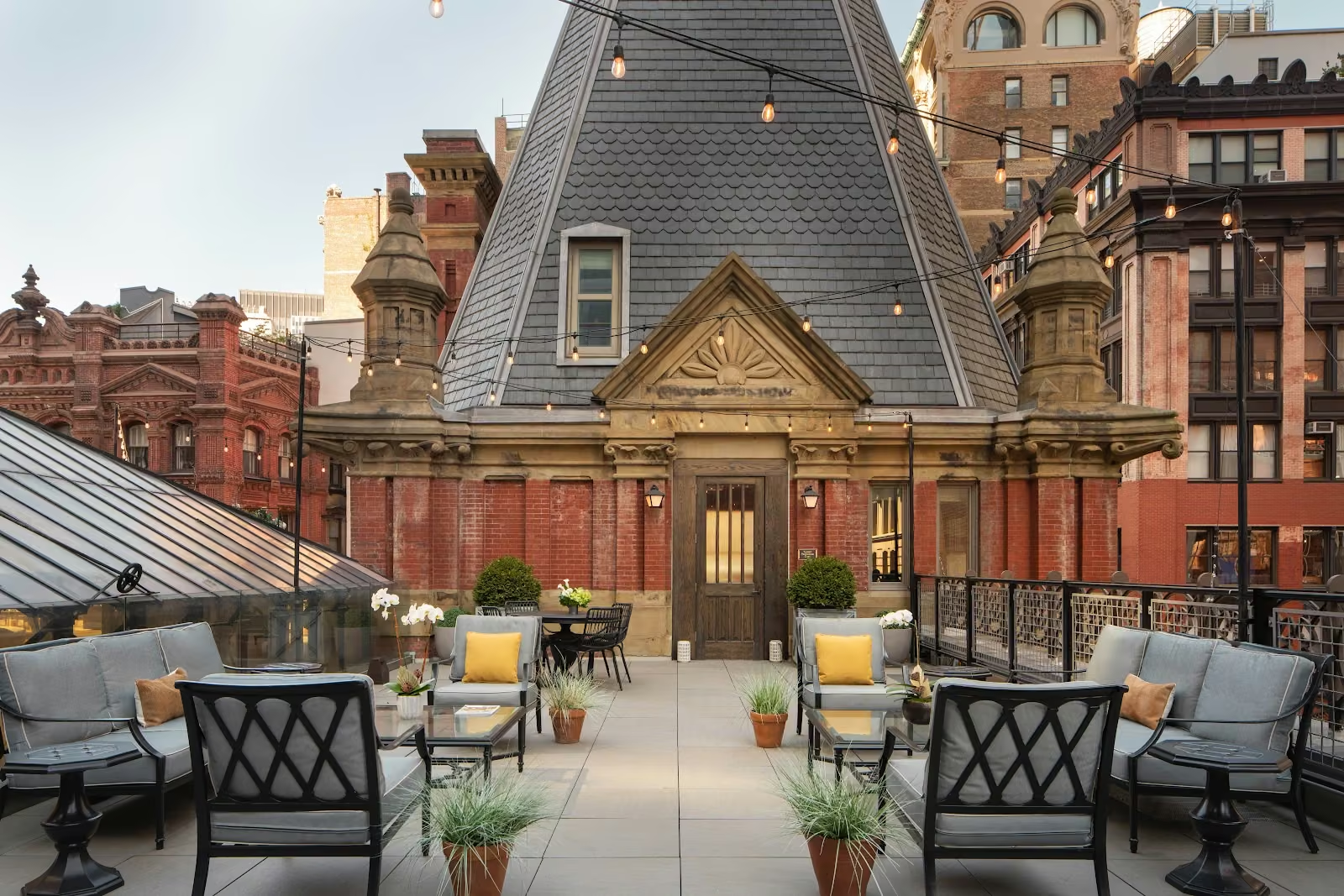
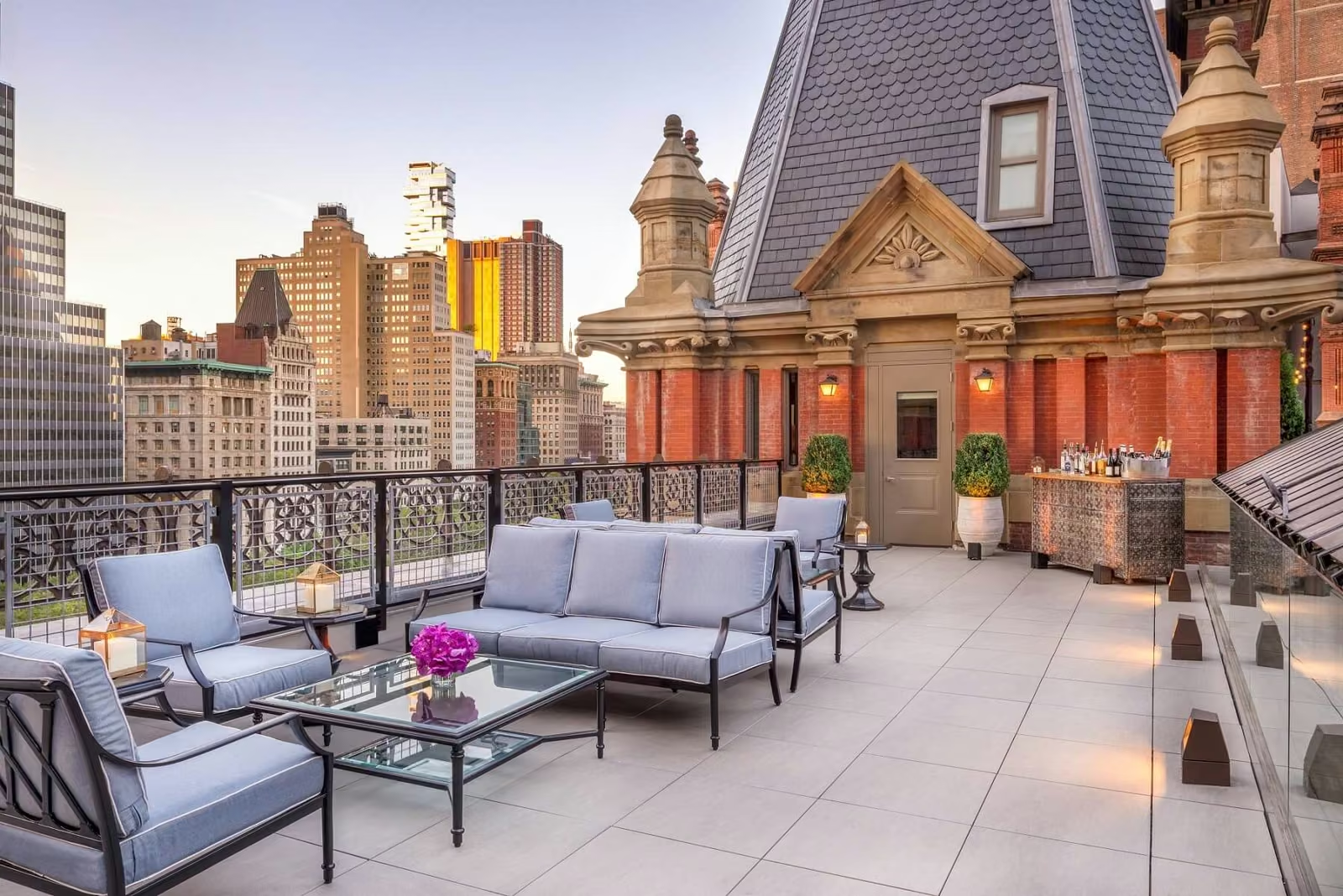
The nine-story Victorian atrium at 5 Beekman Street, ringed by cast-iron balconies shaped like dragons and topped by a pyramidal glass skylight, sat sealed off for decades before a meticulous restoration reopened it in 2016 as The Beekman. Architects Silliman and Farnsworth built the 1883 Temple Court office tower for banker Eugene Kelly the same year the Brooklyn Bridge opened, and Tom Colicchio's Temple Court restaurant now occupies its ground floor.
- 287 rooms
- Opened 2016
- Neighborhood: SoHo
- Architect: Gerner Kronick + Valcarcel; Farnsworth
- Interiors: Martin Brudnizki Design Studio
About The Beekman, A Thompson Hotel
- The atrium's balcony railings were carefully unsealed during a 2014 restoration by Gerner Kronick + Valcarcel, after decades hidden behind walls added for fire safety.
- Interior designer Martin Brudnizki repainted the atrium in deep green and reconstructed a second-story balcony that had been removed at some point in the building's history.
- Conde Nast Traveler and Travel + Leisure both named the hotel to their annual best-new-hotel lists in 2017, celebrating a 133-year-old building as the best new thing in New York.
History
The building at 5 Beekman Street in Lower Manhattan is among the most remarkable survivals in New York architectural history. The Temple Court Building was commissioned by Eugene Kelly, an Irish-born millionaire banker and merchant, who in early 1881 paid $250,000 for two lots at the corner of Nassau and Beekman Streets with the intention of creating a prestige office building for the legal profession. Kelly hired the firm of Silliman and Farnsworth — Benjamin Silliman Jr. and James Mace Farnsworth, who had trained together in the office of Vaux, Withers and Company — and in April 1881 they filed plans for a ten-story office structure. Construction began in May 1881; the building was completed in May 1883, at a total cost of $750,000, the same year the Brooklyn Bridge opened across the water.
The result was extraordinary: a Queen Anne, neo-Grec, and Renaissance Revival tower in red Philadelphia brick, tan Dorchester stone, and terracotta above a two-story granite base, topped by two pyramidal slate roofs at its corners that gave it a profile unlike anything else in lower Manhattan. At its center, nine stories of balconied galleries surrounded an open atrium rising to a pyramidal glass skylight — the cast-iron brackets holding the balconies were shaped like dragons, the balustrades decorated with foliate ironwork, and the floors laid in encaustic tile. The building was among the first in New York to use brick and terracotta exterior cladding on a tall fireproof structure, and its central atrium made it one of the city's earliest examples of the skylighted interior court that would later become a signature of grand American buildings.
Kelly designed the building for lawyers, and its location near the courts of the Civic Center made it immediately popular with the legal profession. For the first half-century of its existence it was described as "one of the finest office buildings in the city." An annex at 119-121 Nassau Street was added between 1889 and 1890, designed by Farnsworth alone in the Romanesque Revival style with an Irish limestone facade. The building passed through successive owners after Kelly's death in 1895, including a period under the Shulsky family following a 1945 sale. The central atrium was walled off sometime in the mid-twentieth century for fire safety, hiding its splendor from decades of visitors.
By 2001 the building was entirely vacant, its atrium sealed, its future uncertain. The New York City Landmarks Preservation Commission had designated the Temple Court Building and its annex as a landmark in 1998, protecting its shell while developers debated its future. Over the following decade the property changed hands multiple times and became a location for film shoots, its extraordinary Victorian interior a magnet for production designers who appreciated what had been preserved by benign neglect. In 2012, GFI Capital Resources purchased the building and committed to converting it into a hotel.
The renovation and conversion, carried out by Gerner Kronick + Valcarcel Architects beginning in 2014, was one of the most celebrated preservation projects in New York in recent memory. Restoration architects tracked down the original tilework manufacturer to reconstruct features, the atrium was carefully unsealed and its railings, skylight, and nine tiers of dragon-bracket galleries were restored to the original configuration. Interior designer Martin Brudnizki repainted the walls in deep green and introduced mid-century furniture to the atrium floors. The stained-glass skylight overhead was replaced and the second-story balcony, which had been removed at some point in the building's history, was reconstructed. A new 51-story residential tower, designed by Gerner Kronick + Valcarcel and capped with two pyramidal peaks echoing the original building's roofline, rose behind the historic structure to complete the Beekman Hotel and Residences complex.
The Beekman, A Thompson Hotel, opened in August 2016, the hotel occupying both the restored historic building and lower floors of the new tower. Tom Colicchio's Temple Court restaurant opened in October 2016 on the ground floor, named for the publishing firm that once occupied the site before Kelly built his tower. The nine-story Victorian atrium — the crown jewel of the conversion — became one of the most photographed hotel interiors in New York, a space where the dragons still hold up the galleries and the skylight still floods the court with daylight, exactly as Farnsworth and Silliman imagined it in 1881. The Beekman was named to Condé Nast Traveler's Hot List and Travel + Leisure's It List in 2017, a recognition that the best new thing in New York was a building 133 years old.
The setting
The Beekman, A Thompson Hotel, occupies the restored 1883 Temple Court building at 123 Nassau Street — one of New York City's earliest skyscrapers — whose Victorian Queen Anne atrium, ringed by cast-iron balconies and topped by a pyramidal skylight, was concealed for decades before a meticulous restoration returned it to landmark status. The Brooklyn Bridge is five minutes on foot, the 9/11 Memorial & Museum seven minutes, and One World Trade Center eight minutes away. The surrounding Financial District, once the colonial heart of New Amsterdam and later the commercial engine of 19th-century America, provides a context of architectural richness that makes this Queen Anne gem one of the most extraordinary hotel addresses in the city.
Restaurants and bars
- Bar Room at the Beekman — Bar · Cocktail bar
Amenities
- Fitness center
- Pet-friendly
Awards
- AAA Four Diamond (2026)
- Forbes Travel Guide Recommended (2026)
- MICHELIN One Key (2025)
Open The Beekman, A Thompson Hotel in the atlas for live weekend rates, photos, and the full folio.
More Thompson Hotels hotels
- The Thompson Austin — Austin, United States · Core Luxury
- Thompson Chicago — Chicago, United States · Core Luxury
- Thompson Dallas — Dallas, United States · Core Luxury
- Thompson Houston — Houston, United States · Core Luxury
- Thompson Nashville — Nashville, United States · Core Luxury
- Thompson Palm Springs — Palm Springs, United States · Core Luxury
More hotels in New York City
- 1 Hotel Central Park — 1 Hotels · High Luxury
- Conrad New York Downtown — Conrad · High Luxury
- Equinox Hotel New York — Equinox Hotels · High Luxury
- Faena New York — Faena · High Luxury
- Fasano Fifth Avenue — Fasano · High Luxury
- Hotel Chelsea — Independent · High Luxury
Thompson Hotels in The Maison: the brand's idea, history and every house on the atlas.