Luxury Hotels Atlas / Places / Italy / Trieste / Savoia Excelsior Palace Trieste
Savoia Excelsior Palace Trieste
Trieste, Italy · Starhotels Collezione · Core Luxury
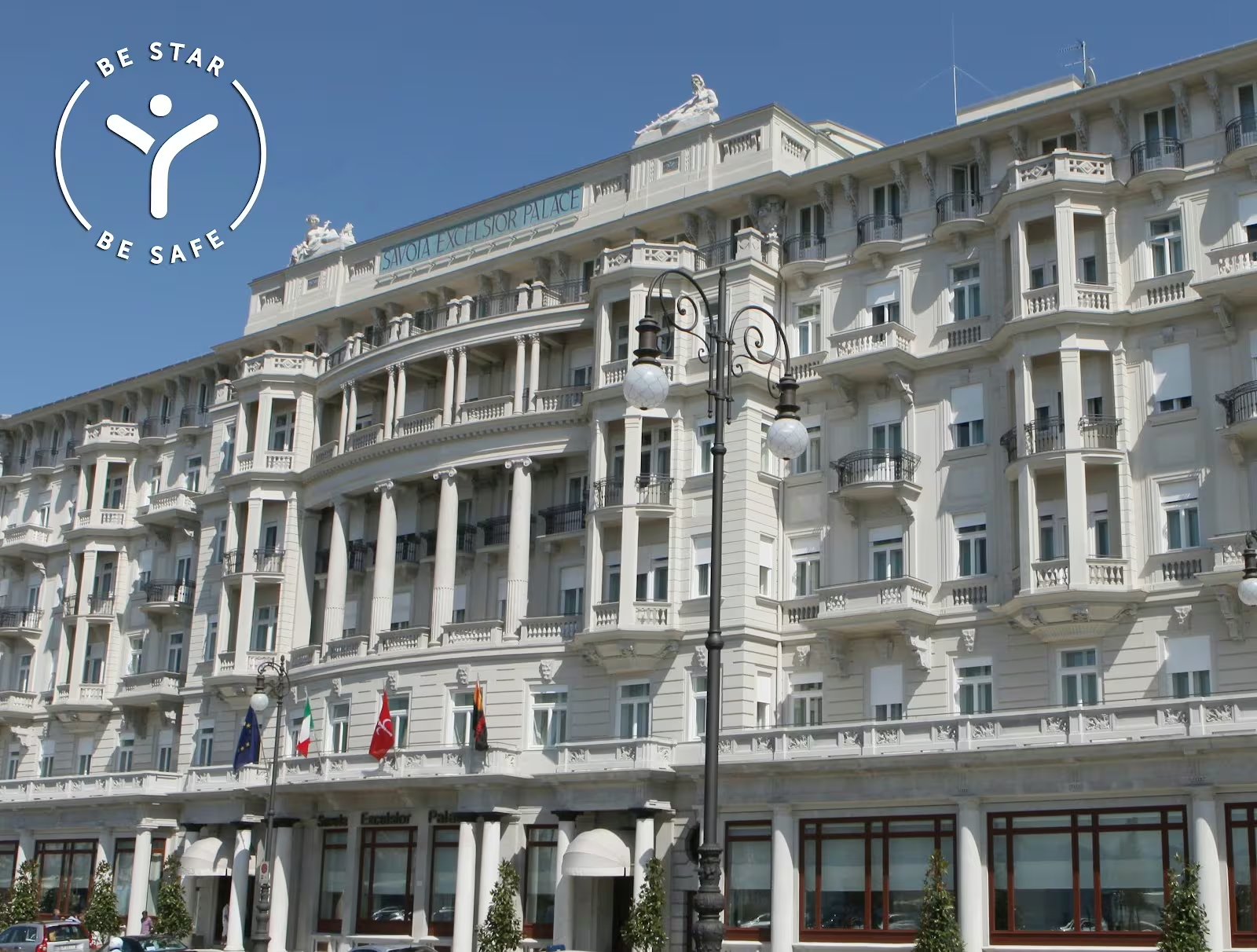
Built against a deadline for a single morning: the Habsburg court needed beds in Trieste for the launch of the Viribus Unitis, the new flagship of the Austro-Hungarian navy, so 250 workmen got the lower floors of Ladislaus Fiedler's hotel ready for its first guests by 18 June 1911. The upper floors followed in 1912. The period press ranked it the most important hotel in Austria-Hungary, while local papers called its cantilevered balconies a gross indecency. Vittorio Emanuele III's arrival in November 1918 added the Savoia to the name. Today 144 rooms sit behind the white facade, across the road from the cruise gangways.
- 144 rooms
- Opened 1911
- Neighborhood: Riva del Mandracchio
- Architect: Ladislaus Fiedler
About Savoia Excelsior Palace Trieste
- The foundations sit on 800 reinforced concrete piles pressed into reclaimed harbour ground with the then-new Zublin system, one of the first uses of the technique in the city.
- Trieste's newspapers called the cantilevered balconies over the seafront a gross indecency when the authorities allowed them to be built.
- Neptune and a figure representing the City of Trieste, carved by Ambrogio Pirovano, still stand on top of the facade.
- Sailors and passengers nicknamed it the Ocean Liner Hotel: the Maritime Station is directly across the road, about a minute from a cruise ship's gangway.
- It reopened in 2009 after nearly three years of restoration supervised by the regional heritage authority, and hosted part of that year's G8 meeting.
History
The hotel was designed by the Viennese architect Ladislaus Fiedler, whose project is dated 6 July 1910, and built between 1910 and 1912 on reclaimed ground at the edge of the harbour. Because the site was soft, the foundations were laid on 800 reinforced concrete piles pressed into the ground with the Zublin system, then cutting edge. The authorities allowed an unusually large hotel on the waterfront and permitted cantilevered balconies over the sea front, which the local press denounced as a gross indecency, on one condition: it had to be finished by June 1911, in time to house the Habsburg court and the dignitaries attending the launch of the Viribus Unitis, the new flagship of the Austro-Hungarian navy. With 250 workmen on site, the lower floors took their first guests on 18 June 1911; the Hotel Excelsior, owned by the Prima Società Austriaca d'Alberghi, was formally inaugurated on 22 June, and the upper floors were only completed and furnished in early 1912. Statues of Neptune and the City of Trieste by the sculptor Ambrogio Pirovano were set on the top of the facade.
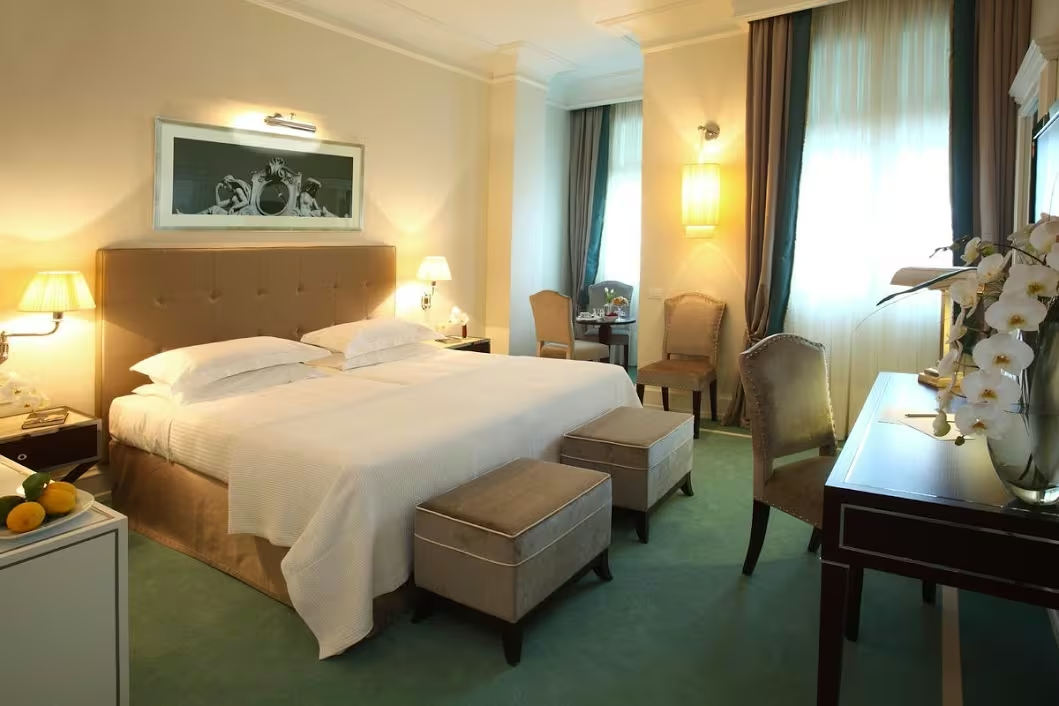
Contemporary chronicles called it the most important hotel in Austria-Hungary, and it became a model for others. On 3 November 1918 King Vittorio Emanuele III arrived in Trieste, and the prefix Savoia was attached to the name. Because the Maritime Station stands directly opposite, the building earned the nickname the Ocean Liner Hotel. Its later history tracks the century: Austrian high command offices, then a troop command and a military hospital in the last years of the First World War; verandas added to the main front between 1915 and 1918; a facade alteration in 1924 to open the Caffè Savoia; the Cinema Savoia and a tavern fitted out in the 1950s; repairs in 1949 to damage from German naval shelling in May 1945. It closed in 1970 for restructuring and reopened in August 1976. After almost three years of complete restoration under the regional heritage directorate it reopened again in 2009, and served as a venue for part of that year's G8 meeting. It now runs as Savoia Excelsior Palace Trieste in the Starhotels Collezione group, with 144 rooms and suites, a grand staircase under a Belle Époque skylight, Liberty and Empire furniture, the Savoy restaurant, the Le Rive bar and nine meeting rooms.
The setting
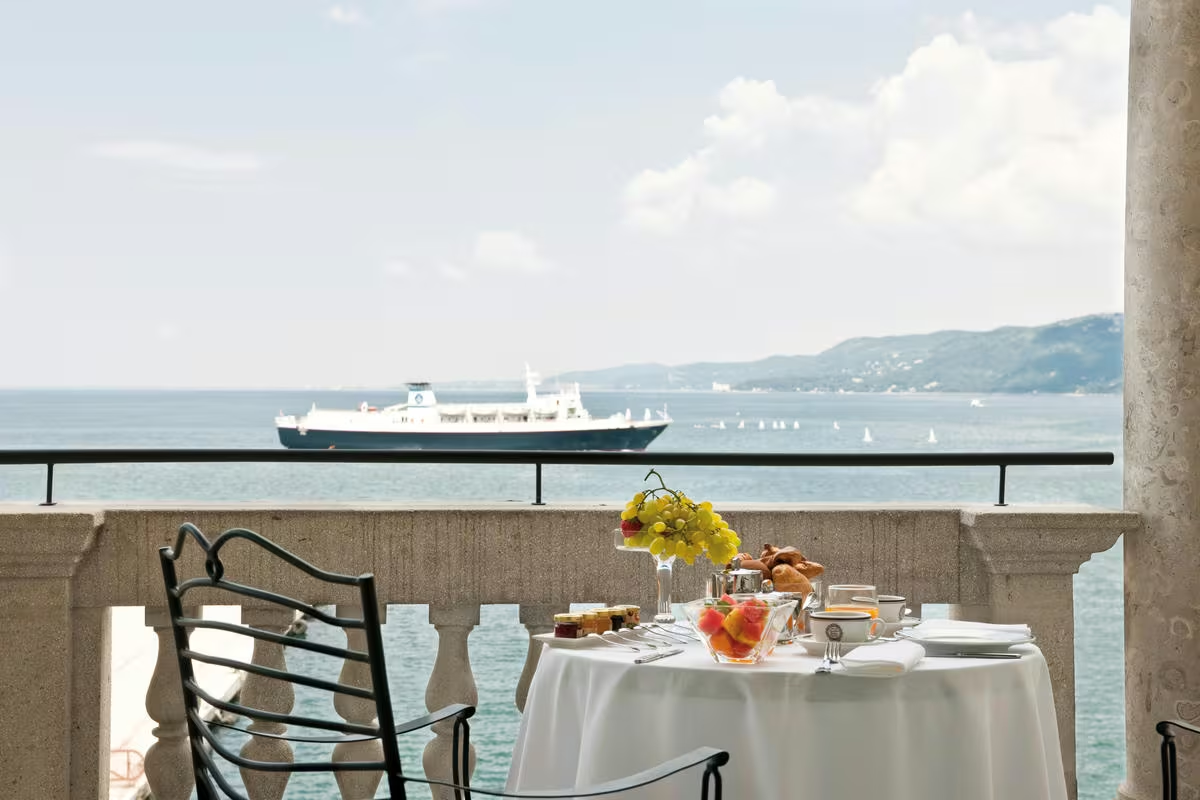
The hotel stands on Riva del Mandracchio, on Trieste's historic seafront, facing the Palazzo dei Congressi and the Maritime Station, with one flank on Piazza Unità d'Italia, one of the largest seafront squares in Europe. On that square sits the Caffè degli Specchi, where James Joyce and Italo Svevo were regulars. Joyce spent much of the decade after 1904 in Trieste, taught English here, wrote a good part of his early work here and said his soul was in the city; Svevo was one of his pupils. This was the Habsburg empire's great port, and the Mitteleuropean grid, the coffee houses and the shipping palaces all date from that era. The castle of Miramare, built for Archduke Maximilian, is a short run up the coast and visible from many of the rooms.
Restaurants and bars
- Savoy Restaurant — Restaurant
- Le Rive Lounge Bar — Bar
Amenities
- High-tech meeting solutions: tailored technology and high-performance solutions
- Tailor-made event services
- Weddings & Celebrations
- Request for Proposal form
- Virtual venue tours via Social Tables
- Capacity chart and floor plans (PDF)
Open Savoia Excelsior Palace Trieste in the atlas for live weekend rates, photos, and the full folio.
More Starhotels Collezione hotels
- Hotel d'Inghilterra Rome — Rome, Italy · Core Luxury
- Hotel Gabrielli Venice — Venice, Italy · Core Luxury
- Helvetia & Bristol Firenze - Starhotels Collezione — Florence, Italy · Accessible Luxury
- Hermitage Hotel & Resort, Forte dei Marmi — Forte dei Marmi, Italy · Accessible Luxury
- Splendid Venice — Venice, Italy · Accessible Luxury
- Rosa Grand Milano — Milan, Italy · Near Luxury
More hotels in Trieste
- Hotel Riviera & Maximilian's — Independent · Core Luxury
- Grand Hotel Duchi d'Aosta — Independent · High Luxury
Starhotels Collezione in The Maison: the brand's idea, history and every house on the atlas.