Luxury Hotels Atlas / Places / Portugal / Porto / Pestana Palácio do Freixo
Pestana Palácio do Freixo
Porto, Portugal · Pestana · High Luxury
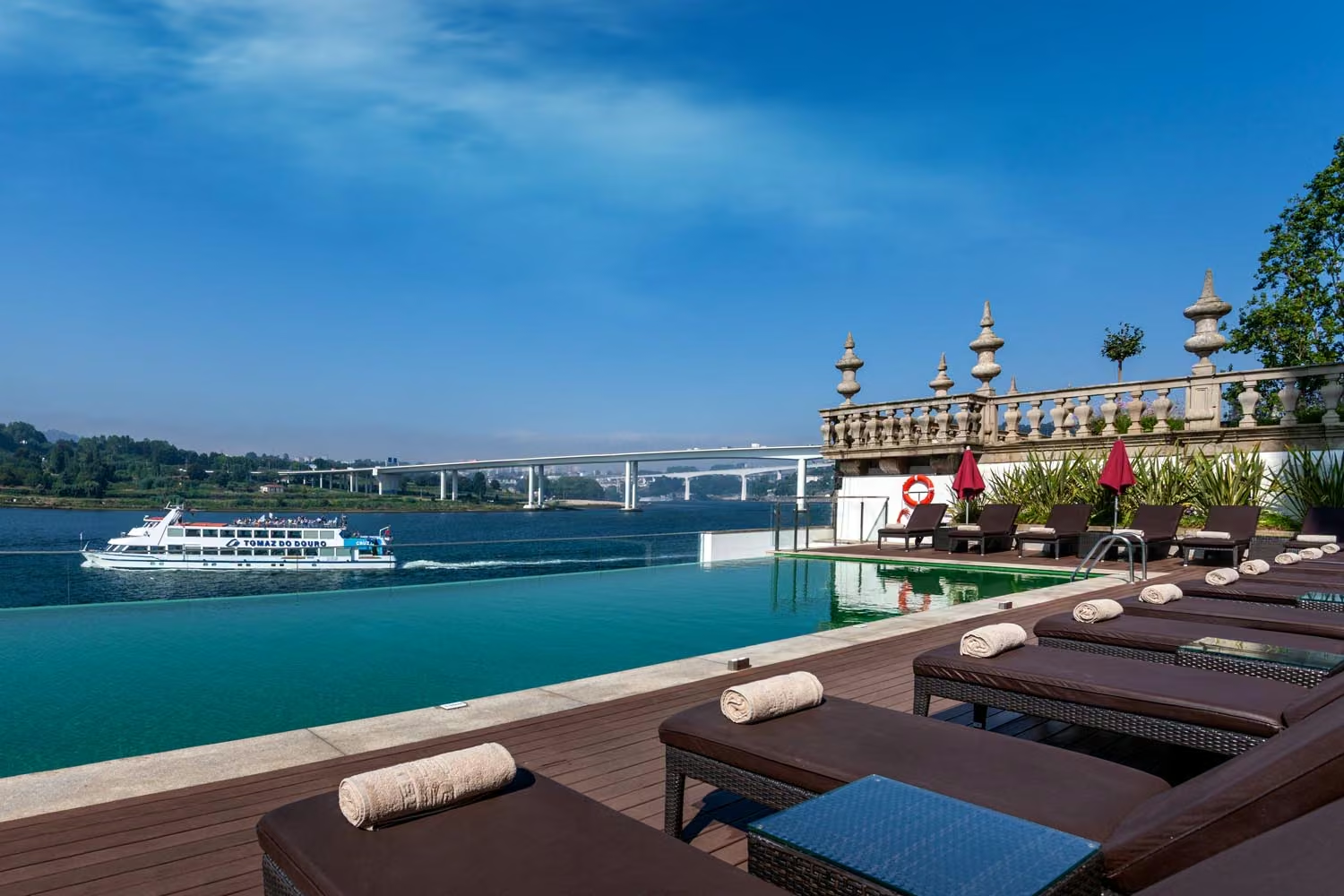
Nicolau Nasoni, the Tuscan who gave Porto the Clérigos tower, drew this Baroque palace on the Douro in the 1740s for Jéronimo de Távora e Noronha, dean of the cathedral. It became a national monument in 1910 and then spent a century inside a working industrial yard: a soap works, then the Harmonia flour mill, whose 45-metre silo rose beside Nasoni's roofline. Fernando Távora led the rescue from 2000 to 2003, and in October 2009 the palace reopened holding the public rooms while the old mill, rebuilt, holds all 87 bedrooms.
- 87 rooms
- Opened 2009
- Neighborhood: São Pedro de Azevedo
- Architect: Nicolau Nasoni (original palace, 18th century); David Sinclair (2009 hotel conversion); Fernando Távora (1990s–2003 restoration of the palace)
- Interiors: Jaime Morais
About Pestana Palácio do Freixo
- Nasoni came from Tuscany to Porto in 1725 to work on the cathedral and never left, leaving the city the Clérigos tower, the cathedral loggia and this palace, the domestic end of his Baroque.
- Every one of the palace's four fronts is drawn differently, so the building never shows you the same face twice as you walk around it.
- The nineteenth century put a soap factory and then a grain mill on the grounds; the Harmonia milling company raised a 45-metre silo next to Nasoni's roof and kept it there for decades.
- All 87 bedrooms are in the converted flour mill, protected as industrial heritage, while the palace keeps the Palatium restaurant and the Nasoni bar.
- It opened in October 2009 as the largest pousada in Portugal and now runs as a Pestana Collection house and a member of The Leading Hotels of the World.
History
Palácio do Freixo was built on the north bank of the Douro in the 1740s for Jéronimo de Távora e Noronha, dean of Porto cathedral, who chose the Tuscan architect Nicolau Nasoni. Nasoni had arrived in Porto in 1725 to work on the cathedral and stayed for the rest of his life, giving the city the Clérigos church and tower, the cathedral loggia and a handful of palaces that turned imported Baroque into a local language. Freixo is the domestic end of that work: a rectangular block with corner towers, low on the river, each of its four fronts drawn differently so that the building never repeats itself as you walk around it. The palace passed to the Távora heirs and then, in the mid nineteenth century, to António Afonso Velado, a Porto merchant enriched in Brazil who was made Baron of Freixo in 1866. He rebuilt the interiors in the revivalist taste of his moment, adding Arab and Chinese salons, and put a soap factory on the grounds.
Industry then nearly swallowed the house. A distillery came first, then the Companhia de Moagem Harmonia, which built its milling works against the palace, drew river water for its steam engines and raised a silo forty-five metres high beside Nasoni's roofline. For more than a century the finest domestic Baroque in Porto stood inside a working industrial yard. The palace had been classified a national monument in 1910, which is largely why it survived at all, and both palace and mill were abandoned around 1969.
Porto City Council bought the complex in the 1980s. Fernando Távora led the restoration under the Metrópolis programme; his first scheme was rejected by the council in January 1998 and had to be redrawn, and the work finally ran from 2000 to 2003 with his son José Bernardo. The Pestana Group took the property in 2006, worked with architect David Sinclair and interior designer Jaime Morais, and opened it in October 2009 as the largest pousada in Portugal. The division is the point of the place: the palace holds the public rooms, the Palatium restaurant and the Nasoni bar, while the old flour mill, classified for its own industrial heritage value, was rebuilt to hold all 87 bedrooms. The hotel is a member of The Leading Hotels of the World.
The setting
The hotel sits about three kilometres upriver from Porto's historic centre, in Campanhã, on a bend of the Douro with roughly 10,000 square metres of gardens running down to the water. It is a quiet, almost rural stretch compared with the Ribeira crowds: the view is of the river, the far bank and the Freixo bridges rather than of streets. Ribeira, the Dom Luís I bridge, the Clérigos tower that Nasoni also designed, and the port lodges of Vila Nova de Gaia are all a short drive or a river walk downstream, and the Casa da Música concert hall is about six kilometres away.
Restaurants and bars
- Palatium — Restaurant
- Nasoni — Restaurant
- Casa do Lago by SOI Porto — Bar · Asian cuisine and signature cocktails
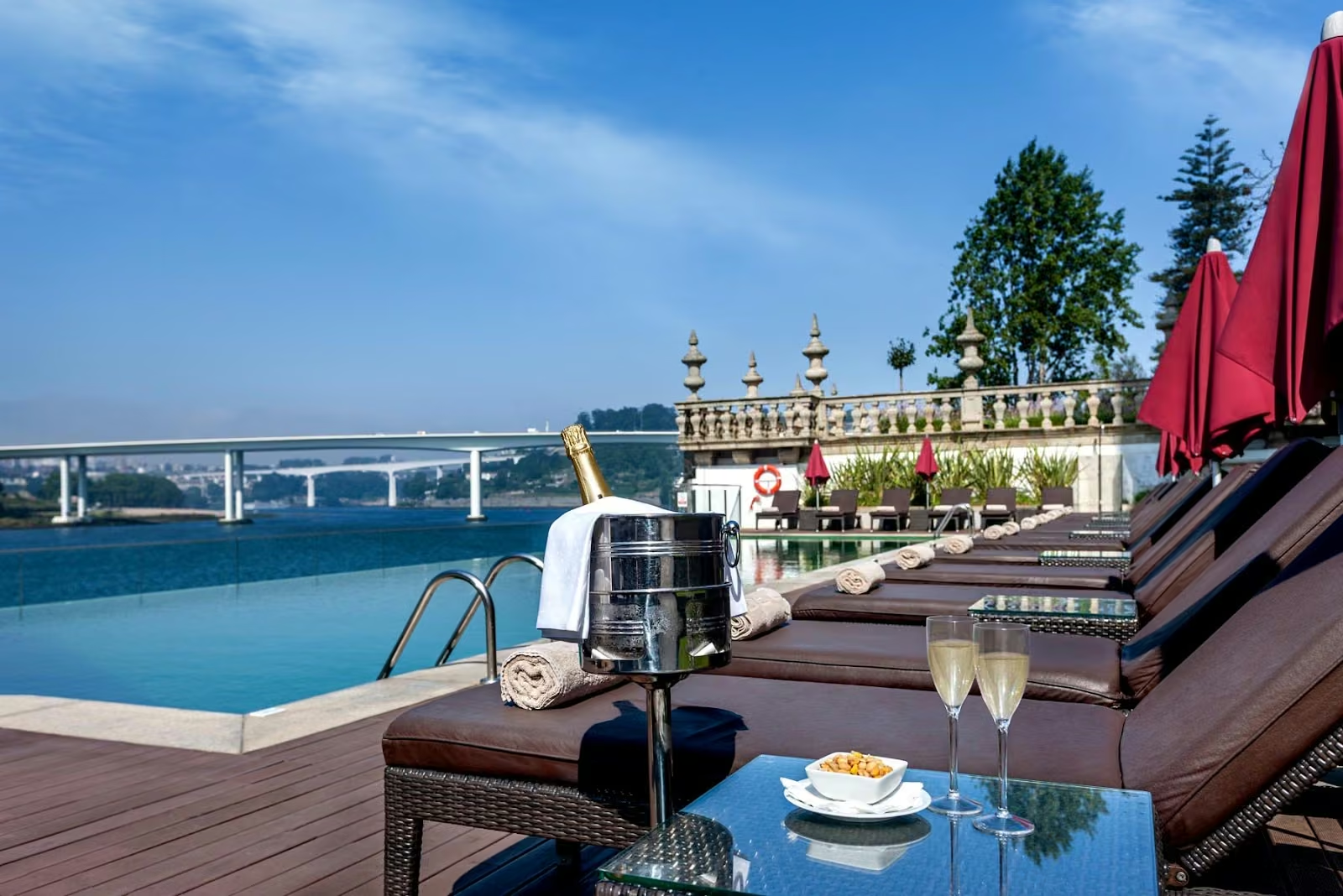
- Promenade Pool & Lounge — Poolside
Experiences
- Guided Cultural Tours — Listed among activities and services offered; charges may apply.
- Tasting of Regional Products — Listed among activities and services offered; charges may apply.
- Visit of Wine Cellars — Port wine cellars are across the river opposite Ribeira; charges may apply.
- River cruises — Listed among activities and services offered; charges may apply.
- Jogging to the Ribeira district — Suggested by the hotel as a way to run outdoors and experience the city.
- Nightclub/DJ — Listed among activities and services offered; charges may apply.
Amenities
- Gardens
- Parking (free)
- Free internet access
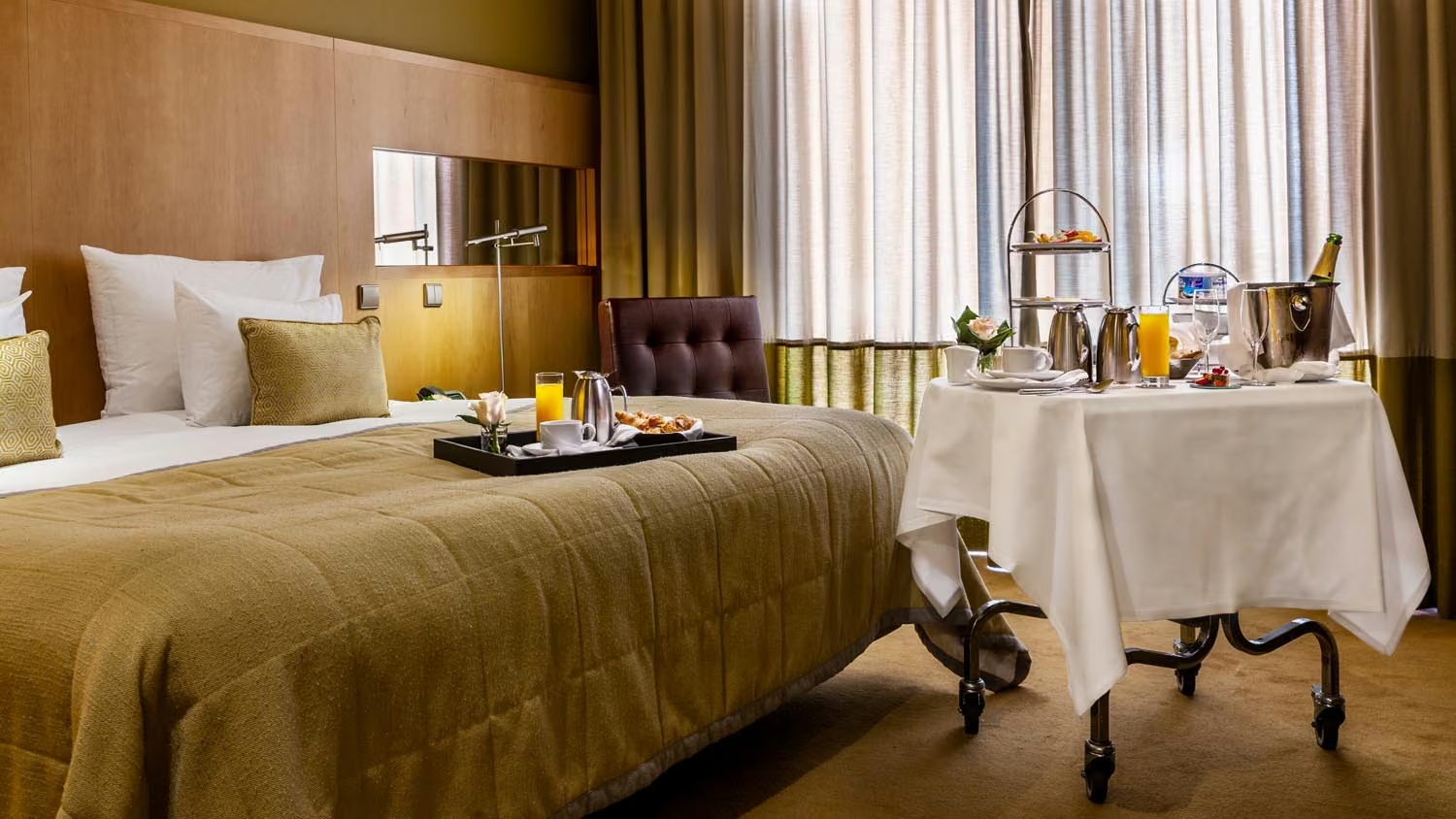
- Room service
- Minibar
- Wedding and event services
- Douro views
- Common areas in the main building
Open Pestana Palácio do Freixo in the atlas for live weekend rates, photos, and the full folio.
More Pestana hotels
- Pestana Casino Park — Funchal, Portugal · Accessible Luxury
- Pestana Cidadela Cascais, Pousada & Art District — Cascais, Portugal · Accessible Luxury
- Pestana Douro Riverside, Preferred Hotels & Resorts, Lifestyle — Porto, Portugal · Accessible Luxury
- Pestana Palace Lisboa Hotel & National Monument — Lisbon, Portugal · Accessible Luxury
- Pestana Porto, A Brasileira, City Center & Heritage Building — Porto, Portugal · Accessible Luxury
- Pestana Vintage Porto Hotel & World Heritage Site — Porto, Portugal · Accessible Luxury
More hotels in Porto
- Casa da Companhia Vignette Collection — Vignette Collection · High Luxury
- Cenica Porto Hotel, Curio Collection by Hilton — Curio Collection · Core Luxury
- Condes de Azevedo Palace — Independent · Core Luxury
- InterContinental Porto - Palacio das Cardosas — InterContinental · Core Luxury
- PortoBay Flores — PortoBay · Core Luxury
- Pousada Porto Rua das Flores — Pousadas de Portugal · Core Luxury
Pestana in The Maison: the brand's idea, history and every house on the atlas.