Luxury Hotels Atlas / Places / Spain / Seville / Hotel Colón
Hotel Colón
Seville, Spain · Gran Meliá · Core Luxury
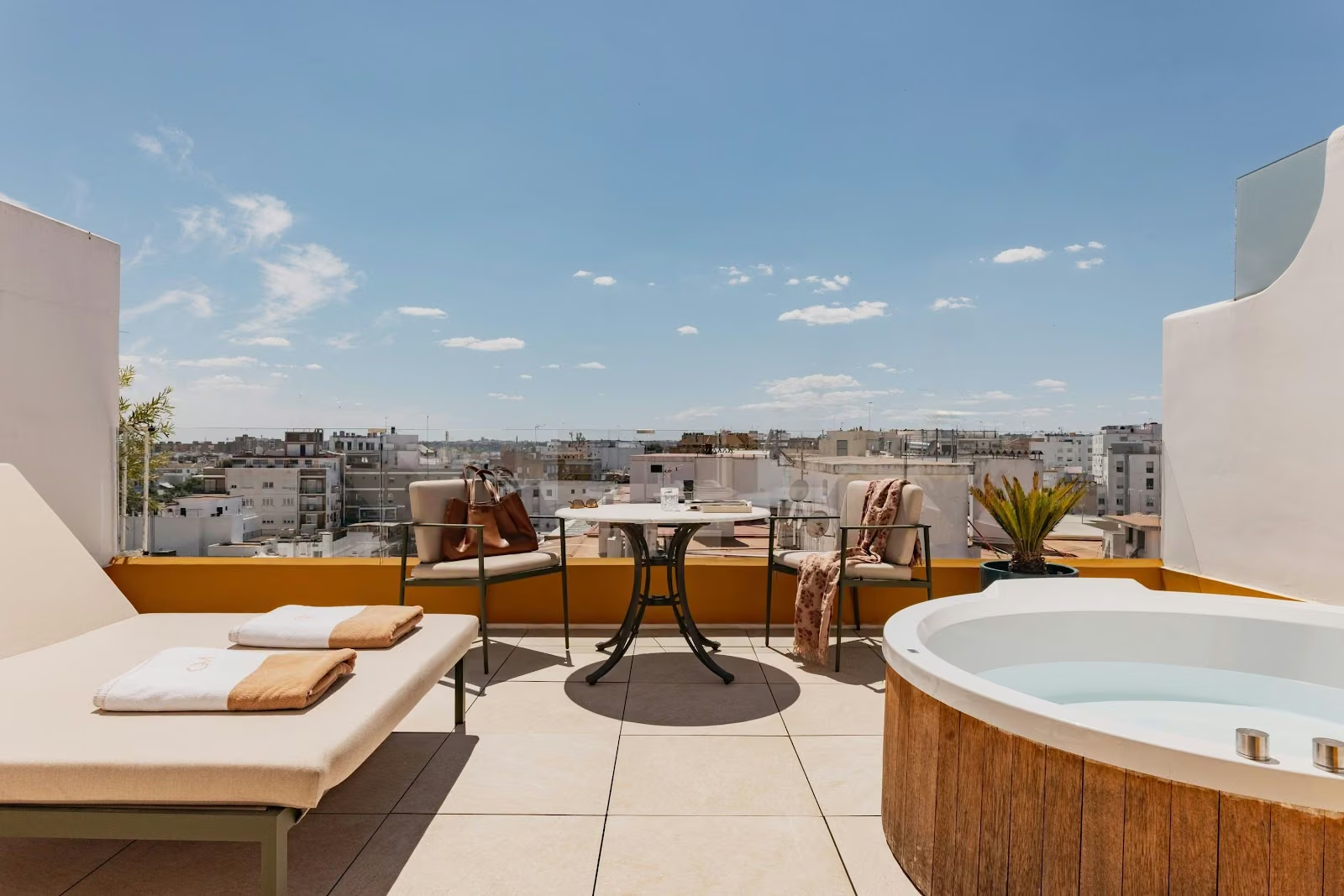
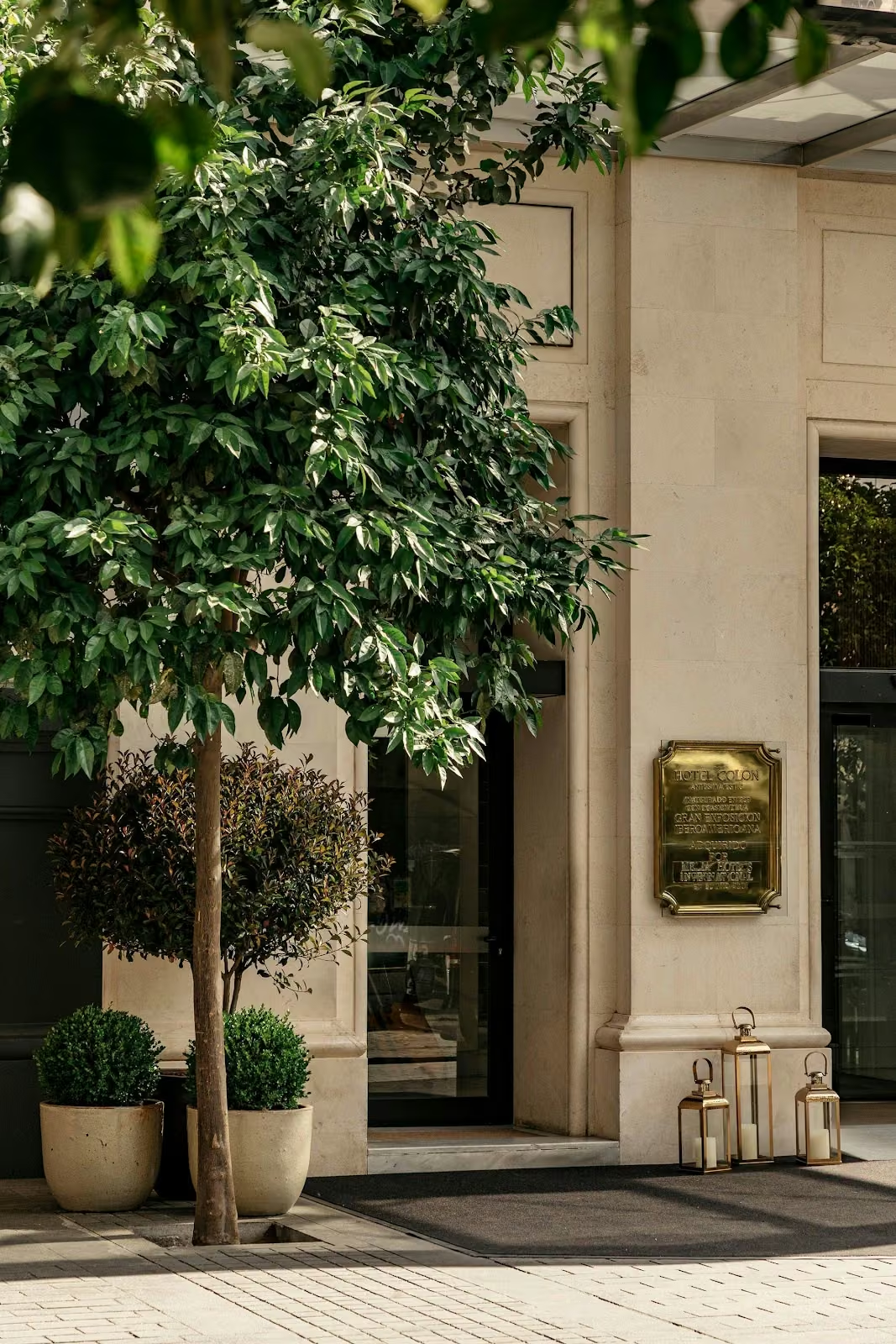
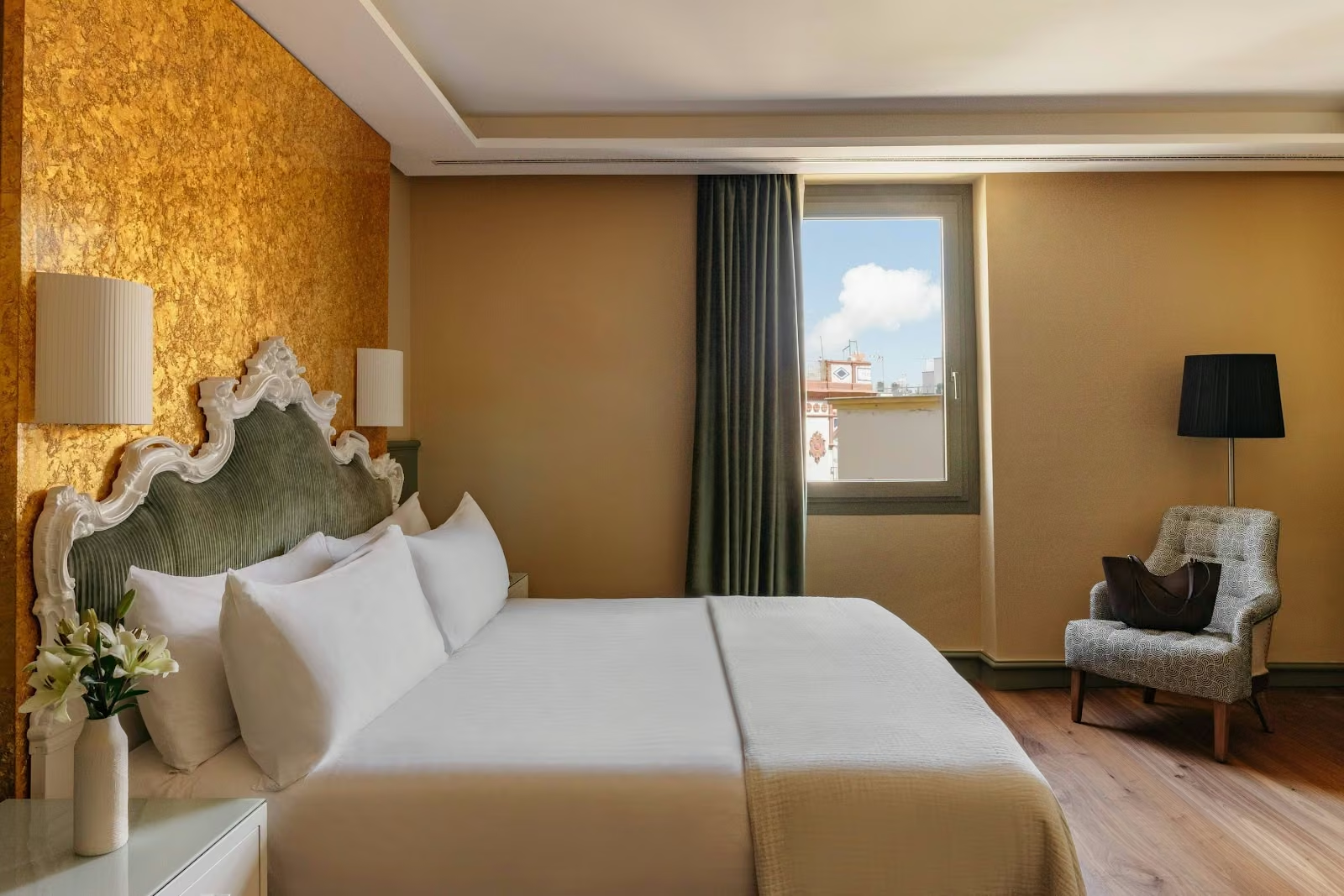
Seville's matadors have been dressing for the Maestranza in this house for generations, each one keeping the same room number out of superstition, setting up his altar inside it, and taking the manager's blessing on the way out the door. It opened as the Hotel Majestic in March 1929 for the Ibero-American Exposition, raised on the first steel skeleton built in Spain and the first hotel in the city to put a bathroom in every room. Over the lobby hangs the original modernist dome, 7.2 metres of coloured glass, one of only four of its kind left in the country.
- 189 rooms
- Opened 1929
- Neighborhood: Casco Antiguo
- Rooms from 215 sq ft (20 m²)
- Architect: José Miguel de la Cuadra Salcedo (Marquis of Castillejas)
About Hotel Colón
- The dome, the facade and the staircase are the only original elements left in the building. The dome is 7.2 metres across, made of thousands of pieces of coloured glass, and one of only four such modernist domes still standing in Spain.
- Manolete, Curro Romero and Espartaco each had a permanent room number here, and bullfighters still build an altar and dress for the ring before walking down to the Maestranza.
- It opened on 29 March 1929 as the Hotel Majestic, named in honour of King Alfonso XIII, and took the name Colon only after the Civil War.
- Ernest Hemingway, Ava Gardner, Catherine Deneuve, Picasso and Dali all stayed. The hotel reopened on 3 February 2009, its eightieth birthday, with each of its seven floors given to a Spanish painter.
- The bar beneath the dome is faced in tiles hand-painted by Isabel Pared, the ceramicist who looks after Seville's Plaza de Espana, working with one of the last potters left in Triana.
History
The Hotel Colón in Seville was built between 1927 and 1929 for the 1929 Ibero-American Exposition and opened on 29 March 1929 as the Hotel Majestic, named in honour of King Alfonso XIII. Designed by architect José Miguel de la Cuadra Salcedo, Marquis of Castillejas, it was the first steel-skeleton building in Spain and the first Seville hotel with en-suite bathrooms, crowned by a celebrated stained-glass atrium dome.
Later renamed the Hotel Colón, the property became a favourite of bullfighters and hosted guests such as Ernest Hemingway, Ava Gardner, Rita Hayworth, Picasso and Dalí. After a major restoration it reopened on 3 February 2009, its eightieth anniversary, and today operates as the Hotel Colón, a Gran Meliá hotel, with seven floors each dedicated to a Spanish painter.
The setting
The hotel stands at Canalejas 1, in the Casco Antiguo a few steps from the Plaza de la Magdalena, on one of the busiest shopping and tapas runs in the city. The cathedral and the Giralda are a short walk south, the Guadalquivir and the Torre del Oro a little further, and Triana waits across the bridge. The address explains the bullfighting association: the Maestranza ring, where Seville's season is decided, is close enough that matadors dress upstairs and walk.
Open Hotel Colón in the atlas for live weekend rates, photos, and the full folio.
More Gran Meliá hotels
- Palacio de los Duques Gran Meliá — Madrid, Spain · Grand Luxury
- Hotel de Mar Gran Meliá — Illetas, Spain · High Luxury
- Hotel Fénix, a Gran Meliá Hotel — Madrid, Spain · Core Luxury
- Villa Le Blanc Gran Meliá — Es Migjorn Gran, Spain · Core Luxury
- Gran Meliá Palacio de Isora — Alcalá, Spain · Accessible Luxury
- Hotel Colón Gran Meliá — Seville, Spain · Accessible Luxury
More hotels in Seville
- Querencia de Sevilla, Autograph Collection — Autograph Collection · Core Luxury
- Radisson Collection Hotel, Magdalena Plaza Sevilla — Radisson Collection · Core Luxury
- CoolRooms Palacio Villapanés — CoolRooms Hotels · High Luxury
- Hotel Alfonso Xiii A Luxury Collection Hotel Seville — The Luxury Collection · High Luxury
- Cavalta Boutique Hotel — Independent · Accessible Luxury
- EME Catedral Hotel — Mercer Hoteles · Accessible Luxury
Gran Meliá in The Maison: the brand's idea, history and every house on the atlas.