Luxury Hotels Atlas / Places / United States / San Francisco / The Palace Hotel
The Palace Hotel
San Francisco, California, United States · The Luxury Collection · High Luxury
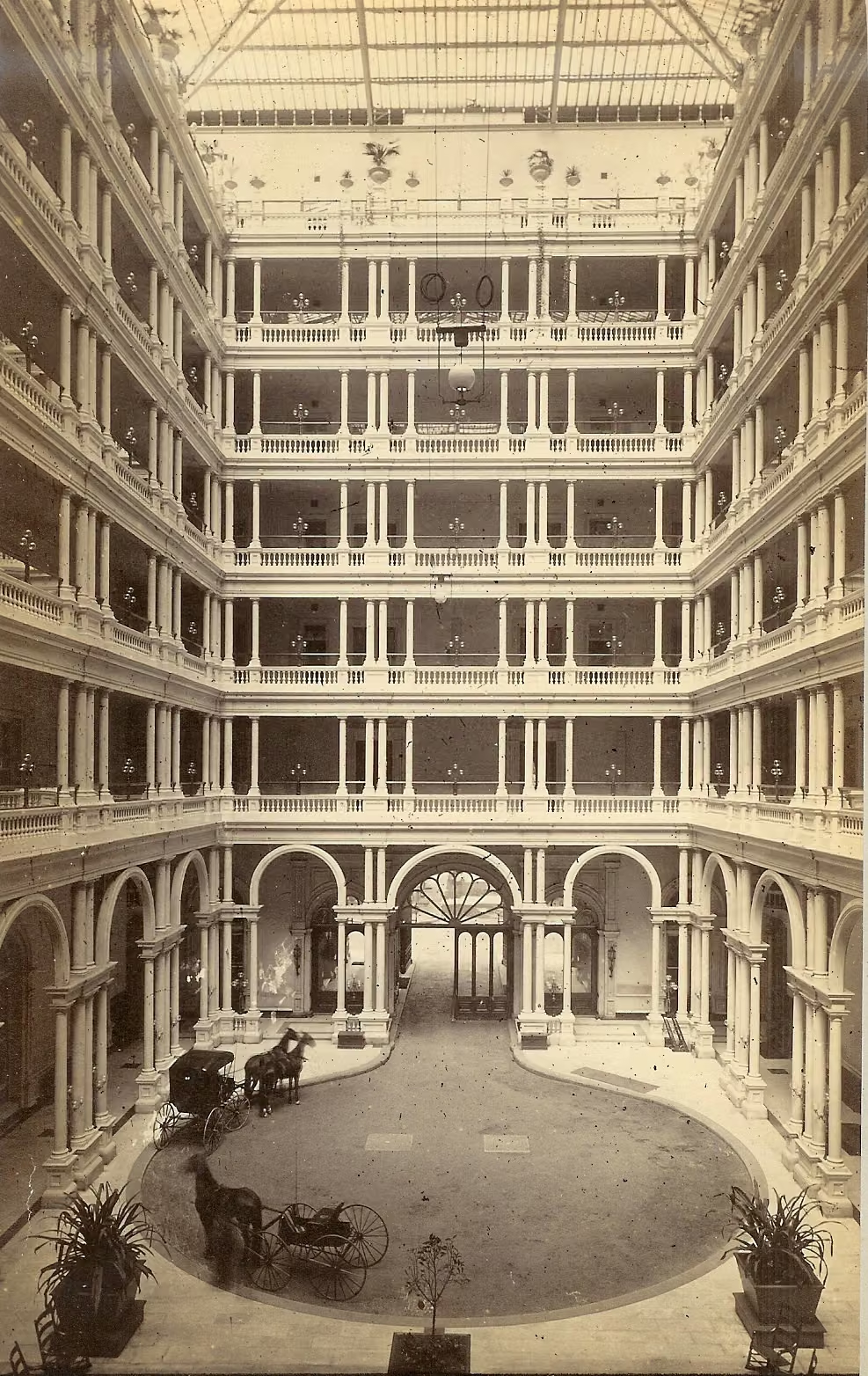
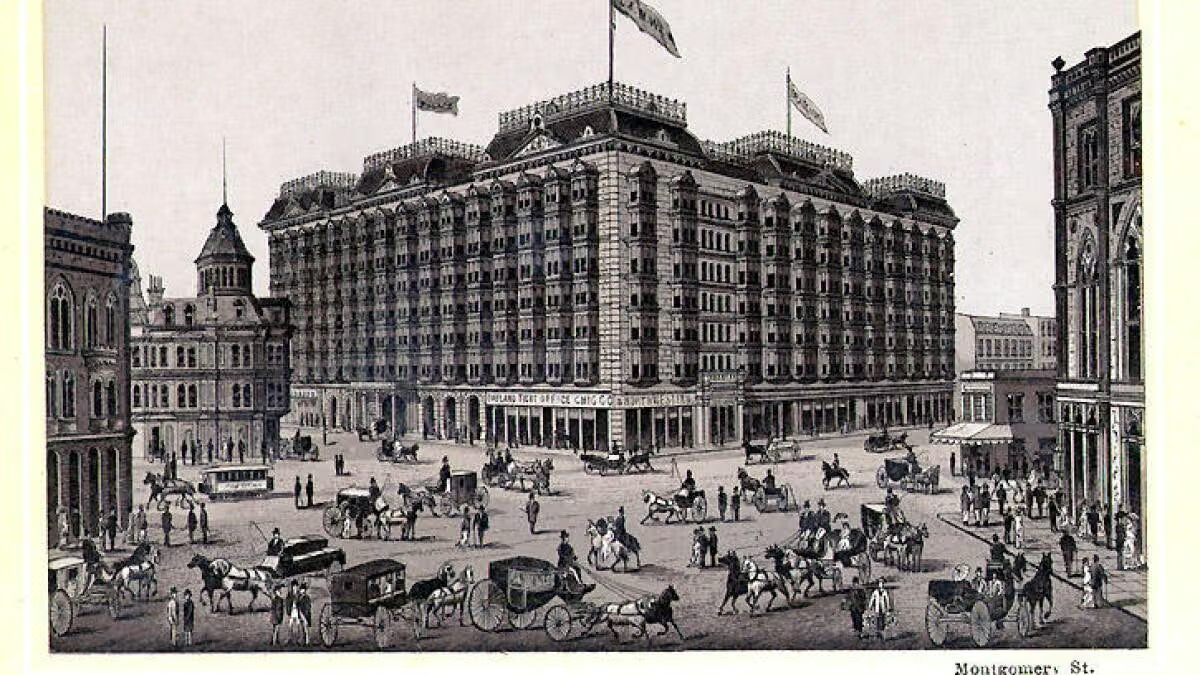
William Ralston's 755-room Palace opened 2 October 1875 as the largest hotel in the American West, then burned after the 1906 earthquake despite surviving the initial shock. Enrico Caruso fled in his nightshirt. The rebuilt Beaux-Arts house reopened 19 December 1909 around the glass Garden Court; Warren Harding died here in 1923.
- 755 rooms
- Opened 1875
- Neighborhood: Union Square
- Architect: John P. Gaynor
About The Palace Hotel
- Ralston drowned in San Francisco Bay the day his Bank of California collapsed in August 1875, two months before the hotel opened; partner William Sharon took control.
- Hawaiian King Kalakaua died in a Palace suite on 20 January 1891 after a stroke during a California visit.
- A temporary 23-room "Baby" Palace opened on Post and Leavenworth on 17 November 1906 while the Market Street house was rebuilt.
- Original amenities included private baths, electric call buttons, and hydraulic "rising rooms" elevators with redwood paneling.
- Garden Court, once the carriage Grand Court, was declared a San Francisco Landmark in 1969.
History
No hotel in the American West carries a longer or more consequential history than the Palace, and few anywhere in the country can match the accumulation of presidents, monarchs, and cultural luminaries who have passed through its doors. The story begins in 1875, when William Chapman Ralston — a wealthy financier who had co-founded the Bank of California — invested five million dollars of the bank's assets in a vision: to build the grandest hotel west of the Mississippi. He hired architect John P. Gaynor to realize it, and the result was a towering seven-story structure with 755 guestrooms, fourteen-foot ceilings, and a magnificent central courtyard called the Grand Court, large enough for arriving carriages to drive in under a gorgeous skylight that ran the full length of the building. Ralston died just two months before his masterpiece opened — a poignant piece of timing — but the hotel opened in October 1875 to immediate acclaim. In its first decades, the Palace received Ulysses S. Grant, William McKinley, Theodore Roosevelt, Oscar Wilde, Enrico Caruso, John D. Rockefeller, and King Kalakaua of the Hawaiian Islands, among thousands of others.
The San Francisco Earthquake of April 1906 tested the building severely. Though the Palace endured the initial shock, the fires that swept the city in the earthquake's aftermath ultimately consumed it. The owners, rather than accepting defeat, initiated one of the most ambitious architectural rebuilding projects in American history. The firm of Trowbridge & Livingston was engaged, and over three years the Palace was reborn in the Renaissance Revival style, reopening in 1909 with a transformed interior centered on the Garden Court — a soaring atrium roofed with a magnificent stained-glass ceiling that reportedly cost seven million dollars to create. The massive Ionic columns, the grand proportions, and the Maxfield Parrish mural depicting the Pied Piper of Hamelin in the Pied Piper Bar became defining features of the new Palace, and the hotel quickly reestablished itself as the social center of San Francisco.
In 1919, Woodrow Wilson held a major dinner at the Palace in an effort to build public support for the League of Nations and the Versailles Treaty. In the spring of 1945, the hotel hosted dozens of international dignitaries who had come to San Francisco for the founding conference of the United Nations — delegates from forty-six nations participated in what became the nine-week United Nations Conference on International Organization, and politicians gathered at the Palace signed early drafts of the United Nations Charter. The formal ratification that October officially brought the United Nations into existence, and the Palace's role as a setting for those negotiations gave it a place in world diplomatic history.
The hotel passed through Sheraton's ownership and then was acquired in the 1970s by the Kyo-Ya group, a Japanese hotel company, which oversaw operations for decades. In 1989 the Palace closed for yet another comprehensive renovation — a $150 million effort to authentically restore its historic architectural character while installing modern infrastructure. The renovation, which took years to complete, earned recognition from the American Institute of Architects, the California Heritage Council, and the National Trust for Historic Preservation, and the City of San Francisco designated the building a historic landmark.
Today the Palace operates as part of Marriott International's Autograph Collection and remains exactly what it has always been: the most historically significant hotel address in American hospitality west of the Mississippi, a place where the Garden Court's stained glass ceiling casts its light over guests who arrive carrying the weight of everything that happened here before them.
The setting
At the southwest corner of Market and New Montgomery streets, The Palace Hotel has presided over San Francisco since William Ralston's original Palace opened in 1875 as the largest hotel in the Western United States. The present Beaux Arts building, rebuilt in 1909 after the 1906 earthquake destroyed its predecessor, is anchored by the Garden Court — a glass-domed dining room declared a San Francisco Landmark in 1969. SFMOMA is six minutes on foot, Union Square eight minutes, and the Ferry Building fifteen minutes, situating The Palace at the seam of the Financial District and SoMa within a cluster of landmark luxury properties that have long defined this intersection. 2 miles from Pier 39.
Restaurants and bars
- Pied Piper — Restaurant · Bar & grill
Amenities
- Indoor pool
- Fitness center
- Fine dining
- Pet-friendly
Awards
- AAA Four Diamond (2026)
- Forbes Travel Guide Recommended (2026)
Open The Palace Hotel in the atlas for live weekend rates, photos, and the full folio.
More The Luxury Collection hotels
- The Canyon Suites at The Phoenician, A Luxury Collection Resort — Scottsdale, United States · Grand Luxury
- Bellagio — Las Vegas, United States · High Luxury
- Perry Lane Hotel, A Luxury Collection Hotel — Savannah, United States · High Luxury
- The Gwen, a Luxury Collection Hotel — Chicago, United States · High Luxury
- The Joseph A Luxury Collection Hotel Nashville — Nashville, United States · High Luxury
- The Phoenician — Scottsdale, United States · High Luxury
More hotels in San Francisco
- Fairmont San Francisco — Fairmont · High Luxury
- Hotel Drisco — Independent · High Luxury
- The Huntington Hotel — Independent · High Luxury
- The Ritz-Carlton, San Francisco — Ritz-Carlton · High Luxury
- Four Seasons Hotel San Francisco — Four Seasons · Grand Luxury
- Four Seasons Hotel San Francisco at Embarcadero — Four Seasons · Grand Luxury
The Luxury Collection in The Maison: the brand's idea, history and every house on the atlas.