Luxury Hotels Atlas / Places / United States / West Hollywood / Chateau Marmont
Chateau Marmont
West Hollywood, California, United States · Independent · Grand Luxury
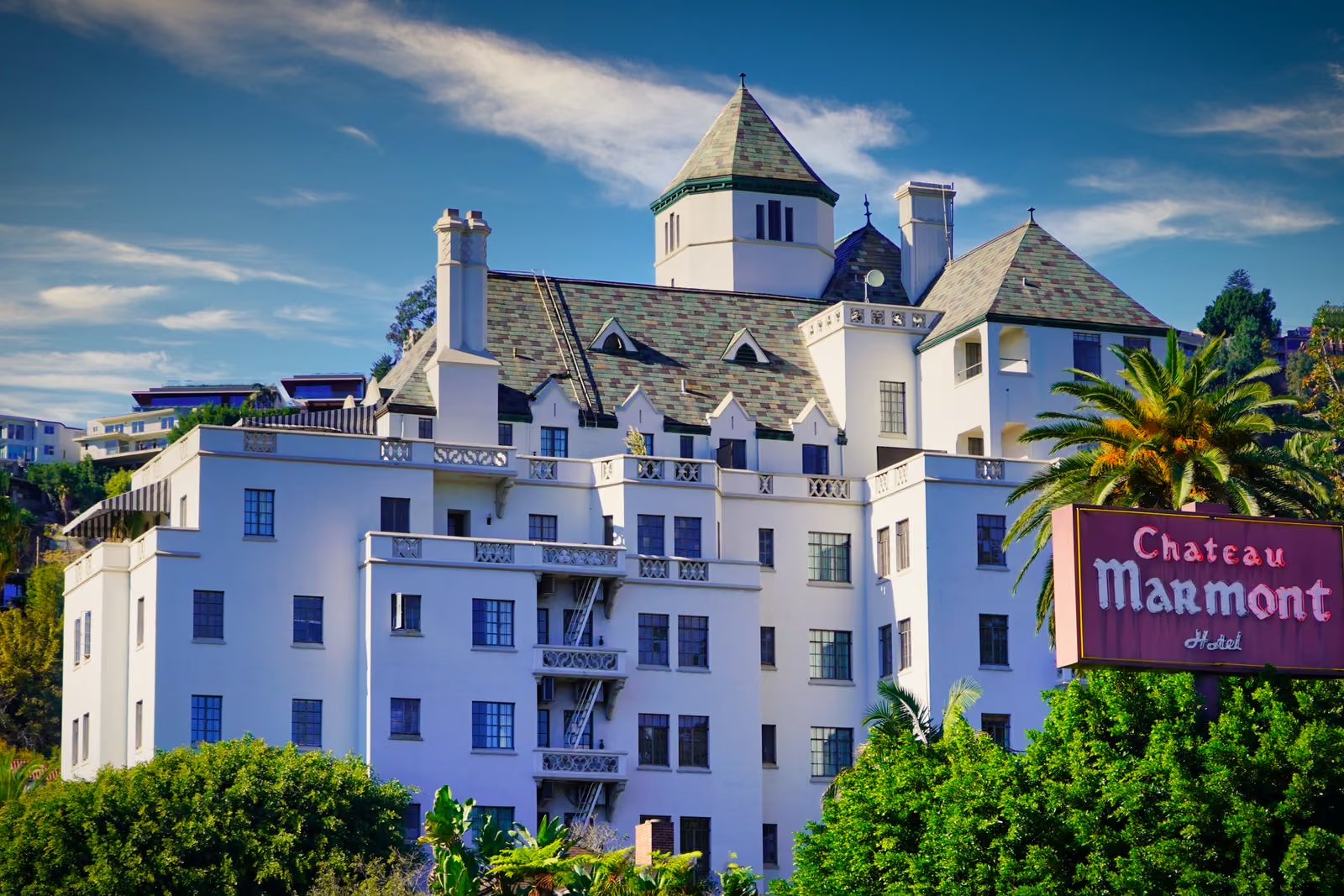
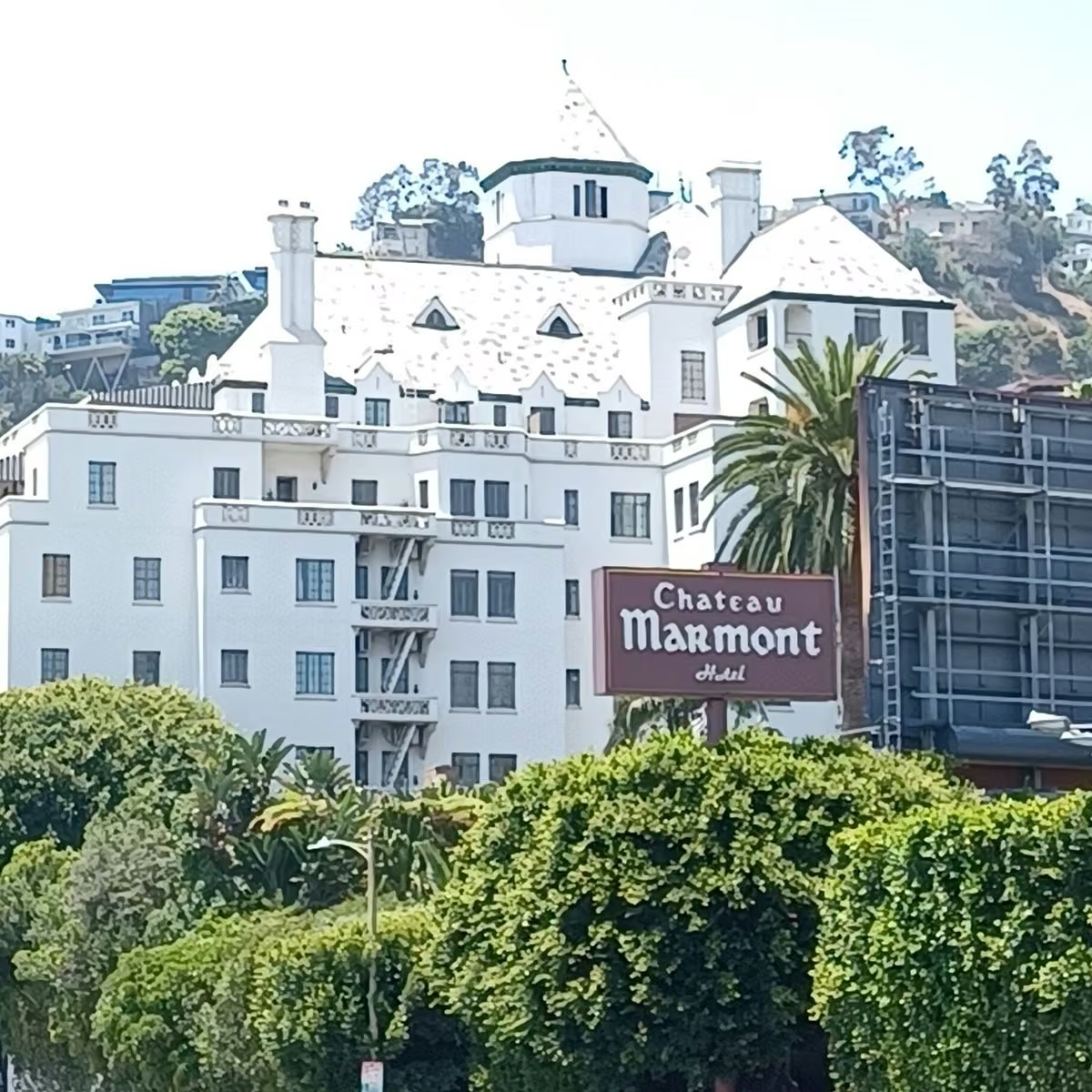
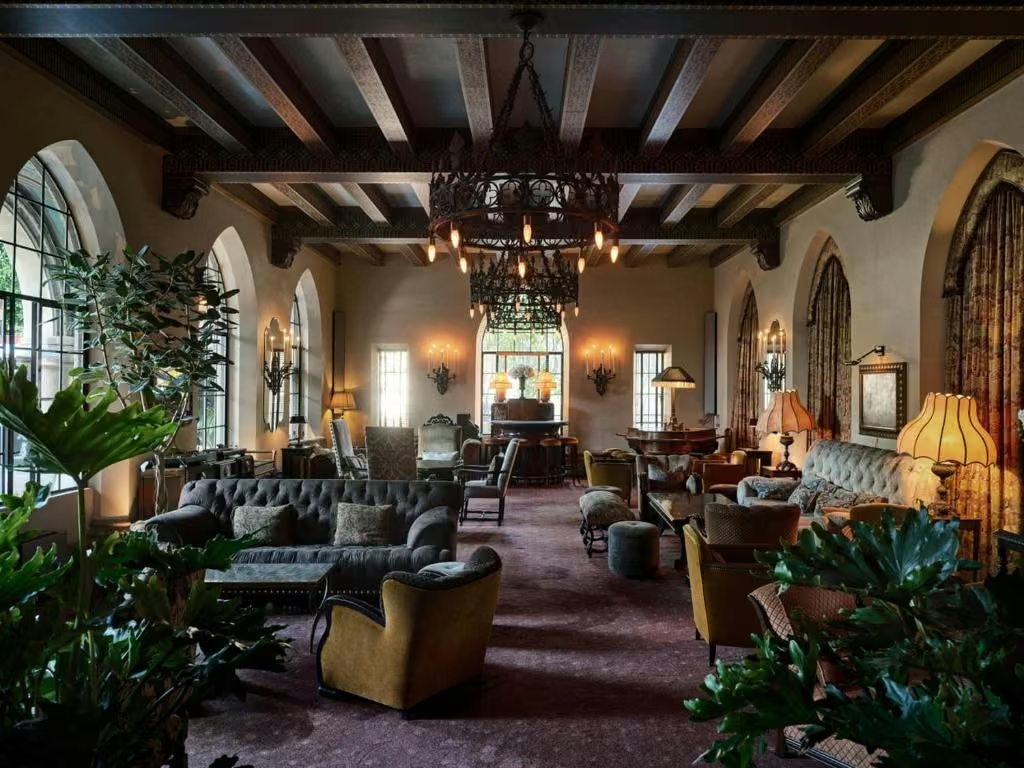
Attorney Fred Horowitz modeled Chateau Marmont on photos of France's Château d'Amboise and opened the seven-story hillside pile on Sunset Boulevard on 1 February 1929 as Hollywood's newest apartment house. Vitagraph co-founder Albert E. Smith converted it to a hotel in 1931; later owner Erwin Brettauer was noted for welcoming Black guests when other Hollywood hotels still enforced a color line. Case Study architect Craig Ellwood designed two bungalows in 1956, and André Balazs has kept the castle-like complex deliberately unrestored in look since 1990.
- 63 rooms
- Opened 1931
- Neighborhood: Sunset Strip
- Architect: Craig Ellwood
About Chateau Marmont
- Horowitz rejected the names Chateau Sunset and Chateau Hollywood before choosing Chateau Marmont after the small street at the front door.
- Built to be earthquake-proof, the masonry structure survived major quakes in 1933, 1952, 1971, 1987, and 1994 without serious structural damage.
- Silent-film actress Ann Little managed the hotel during the 1930s after its conversion from apartments.
- Sofia Coppola shot her film Somewhere on site in 2010, and the hotel appears in La La Land and A Star Is Born.
- Beyoncé and Jay-Z have hosted their annual post-Oscars Gold Party at the hotel since 2018.
History
Chateau Marmont began as a legal problem, or at least as a lawyer's obsession. In 1926, Fred Horowitz, a prominent Los Angeles attorney, acquired a site at Marmont Lane and Sunset Boulevard and set about building the apartment house he had long envisioned. He had photographed a Gothic chateau along the Loire River during travels in Europe, and he commissioned his brother-in-law, European-trained architect Arnold Weitzman, to translate those photographs into a seven-story, L-shaped building on the hillside above the Sunset Strip. Weitzman designed a structure of thick masonry walls and vaulted Gothic arches — deliberately built, Horowitz insisted, to be earthquake proof and fireproof — with the external silhouette of a Loire Valley castle transposed without apology onto a Hollywood ridge. The building's name was drawn from the small street running in front of the property.
Chateau Sunset and Chateau Hollywood were considered and rejected. Chateau Marmont it became. On February 1, 1929, the Chateau Marmont opened as an apartment building, marketed in local newspapers as Los Angeles's newest, finest, and most exclusive residence, superbly situated close enough to active business to be accessible and far enough away to ensure quiet and privacy. The Depression changed the economics. Long-term tenants proved hard to hold, and Horowitz sold the building to Albert E. Smith for $750,000.
Smith converted the apartments to hotel use the following year, refurnishing the suites with antiques acquired from depression-era estate sales and positioning the Chateau as a residential hotel that would appeal to the film industry's growing celebrity class. The apartments became suites with kitchens and living rooms; the residential character that Horowitz had built into the architecture turned out to be exactly what Hollywood wanted. In the 1930s, nine Spanish cottages were constructed adjacent to the hotel and later acquired by the property; Case Study architect Craig Ellwood designed two of the four bungalows in 1956. The building survived major earthquakes in 1933, 1953, 1971, 1987, and 1994 without structural damage — Weitzman's construction doing precisely what Horowitz had demanded. The Chateau was designated Los Angeles Historic-Cultural Monument No. 151 in 1976.
What made the Marmont famous, beyond its architecture and its longevity, was its culture of discretion. The thick walls, the private entrances, the residential scale, and a staff trained to see nothing and say less created an environment where people with reasons to be invisible could simply blend into the building. Greta Garbo lived there. Howard Hughes kept a watch over the hotel from his vantage point across the street. Led Zeppelin rode motorcycles through the lobby in the 1960s.
John Belushi died in Bungalow No. 3 on March 5, 1982. Helmut Newton, a permanent resident in later life, lost control of his car in the driveway in January 2004 and died. The Marmont has never been a conventionally luxurious hotel. Its carpets have seen better decades; its aesthetic is one of studied, slightly glamorous decay. But it has outlasted every attempt to replace or supersede it as the address where Hollywood goes to hide, and no purpose-built luxury property on the Strip has ever replicated what Horowitz's Loire Valley fantasy accidentally created.
The setting
Chateau Marmont rises on its hillside perch at 8221 Sunset Boulevard at the western border where Los Angeles meets West Hollywood, designed in 1927 as a luxury apartment building modeled on the Loire Valley's Château d'Amboise and converted to a hotel in 1932 ahead of the Los Angeles Olympics. It rapidly became Hollywood's definitive refuge for golden-age stars — Greta Garbo, Howard Hughes, Humphrey Bogart — who valued absolute discretion above conventional hotel service. Its Bar Marmont remains one of the most storied establishments on the Strip, and the Hollywood Walk of Fame and TCL Chinese Theatre are seventeen and eighteen minutes by transit respectively. 5-minute walk to Laugh Factory comedy club. 3 miles from Rodeo Drive's high-end shops.
Restaurants and bars
- Chateau Marmont Restaurant — Restaurant · Californian
- The Garden at Chateau — Restaurant
Amenities
- Pool
- Fitness center
- Pet-friendly
Awards
- MICHELIN Two Keys (2026)
Open Chateau Marmont in the atlas for live weekend rates, photos, and the full folio.
More hotels in West Hollywood
- San Vicente Bungalows & San Vicente Santa Monica — Independent · High Luxury
- The Charlie — Independent · High Luxury
- The West Hollywood EDITION — EDITION · High Luxury
- Chamberlain West Hollywood — Independent · Core Luxury
- Hotel 850 SVB — Independent · Core Luxury
- Pendry West Hollywood — Pendry · Core Luxury