Luxury Hotels Atlas / Places / United Kingdom / London / St. Ermin’s Hotel
St. Ermin’s Hotel
London, England, United Kingdom · Autograph Collection · Core Luxury
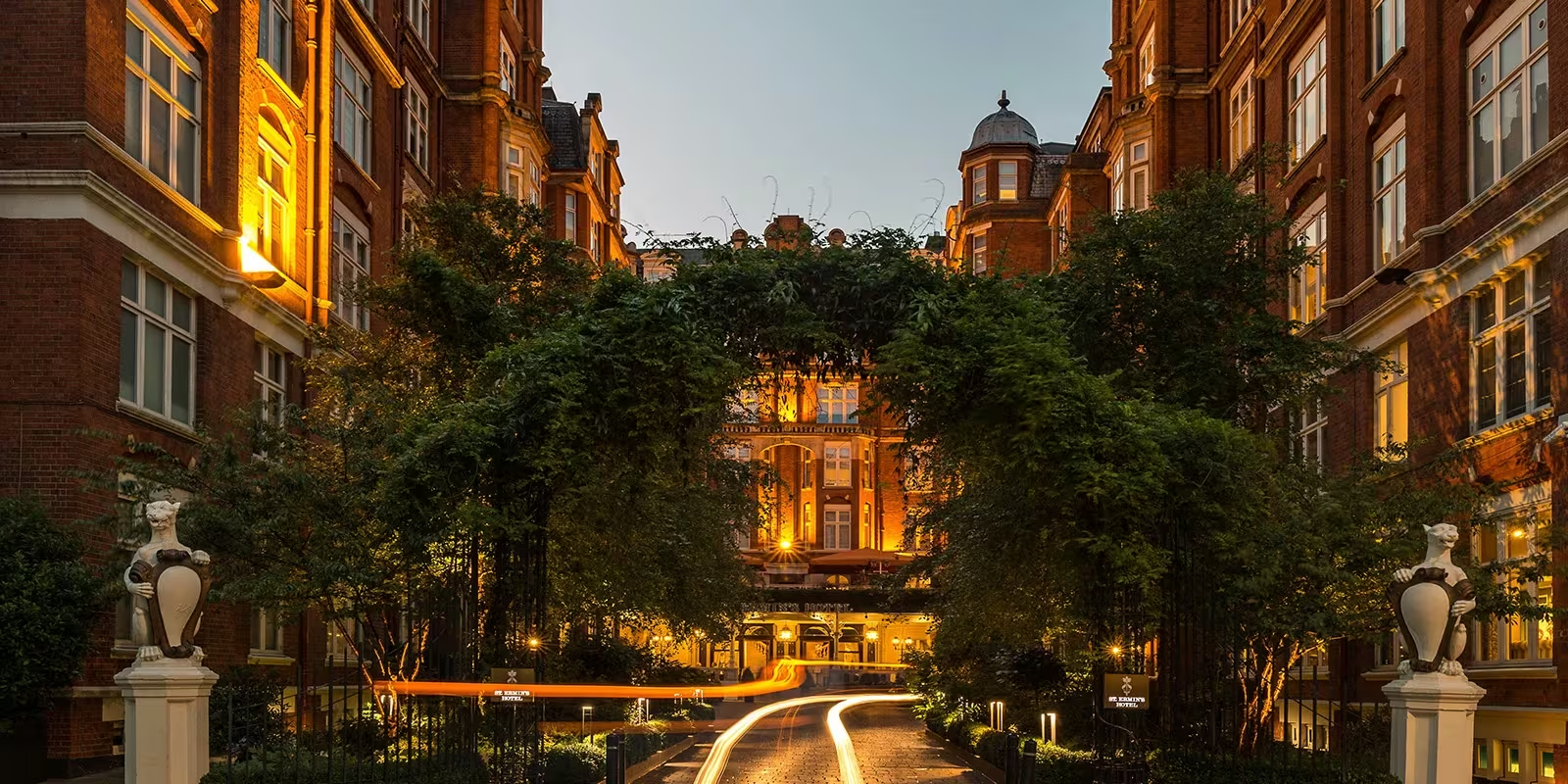
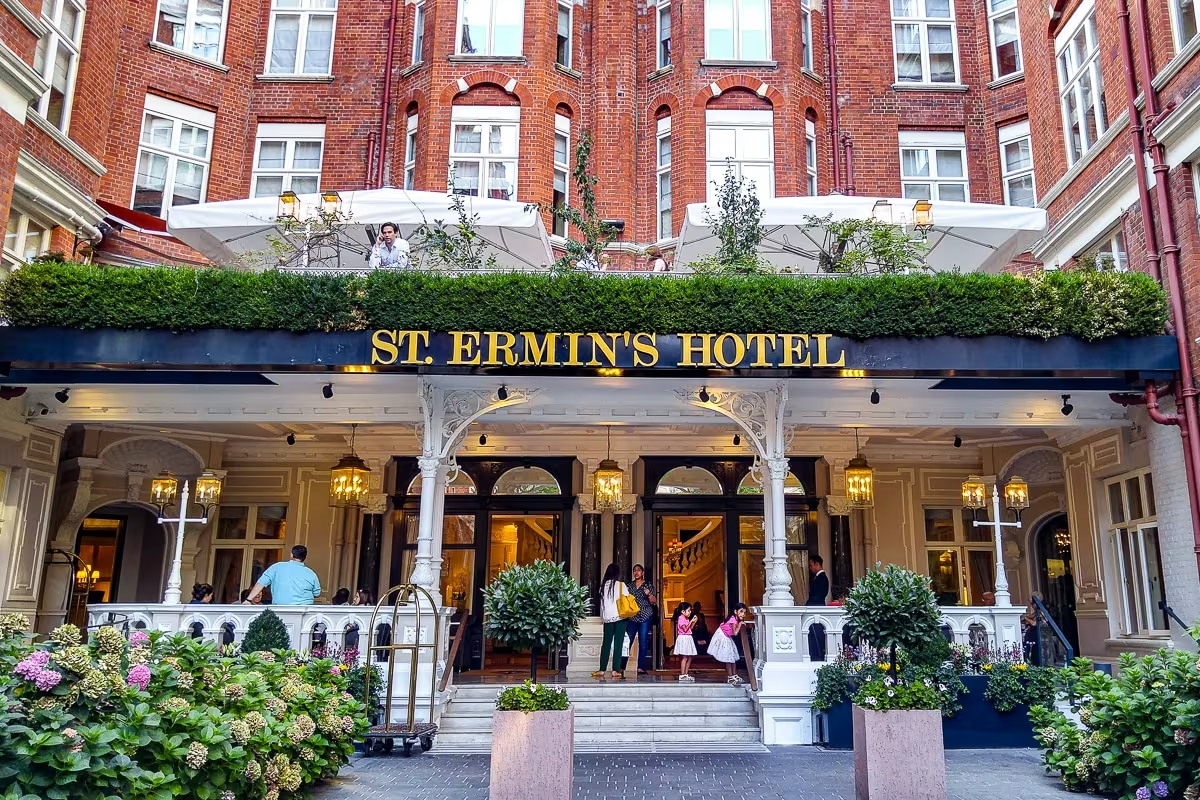
This Grade II-listed Queen Anne mansion block by Edwin T. Hall opened as apartments in 1889, became a hotel by 1899 after theatre architect J. P. Briggs added neo-Baroque public rooms, and then turned into one of Britain's most consequential spy addresses. From March 1938 it housed SIS Section D and is identified as the birthplace of the Special Operations Executive. Cambridge Five agents Philby and Maclean used it to meet Soviet handlers a short walk from Westminster Abbey and the Houses of Parliament.
- 331 rooms
- Opened 1899
- Neighborhood: Westminster
About St. Ermin’s Hotel
- Briggs remodelled the courtyard end into a double-height foyer with an undulating gallery balcony reached by a double staircase.
- During the Second World War the hotel served as a discreet annexe for SIS, MI5, and Naval Intelligence officers.
- Noël Coward stayed here, as did Cambridge Five figures including Kim Philby, Guy Burgess, and Anthony Blunt.
- The name nods to a medieval chapel of St Ermin once thought to stand on the site west of Westminster's Great Almonry.
- A Historic Hotels Worldwide member, it holds AA Four Red Stars for 2025 after a post-2010 entrance and lobby refresh.
History
St. Ermin’s Hotel occupies one of Westminster’s most quietly consequential addresses: a late-Victorian mansion block completed in 1889 and designed by architect Edwin T. Hall, with John Priestley Briggs later credited in the building’s development and refurbishment. The property began life not as a hotel but as a high-status residential block, and it was purchased in 1896 with conversion to hotel use completed by 1899. That transformation set the stage for a building that would become deeply entwined with British statecraft.
By the 1930s, St. Ermin’s had become a favoured meeting place for officers of the Secret Intelligence Service, and from March 1938 it was documented as the headquarters of SIS Section D, later home to the Special Operations Executive under “Statistical Research Department” cover. During the Second World War, the hotel functioned as a discreet annexe for SIS and was used regularly by SIS, MI5, and Naval Intelligence Division officers. Wikipedia’s historical summary also identifies it as the birthplace of the SOE, underscoring the building’s unusual wartime role in London’s intelligence ecosystem.
The hotel’s guest list and social history reflect that embeddedness in the capital’s political and cultural life, with names including Noël Coward, Kim Philby, Guy Burgess, and Anthony Blunt associated with the property’s history. After a change of ownership in 2010, St. Ermin’s underwent substantial refurbishment and its main entrance was updated, bringing the old mansion block into a new chapter while preserving its historic character. Today, the hotel’s story is defined less by ceremony than by concealment, with a layered history that moves from elite residential housing to covert wartime nerve centre and finally to a restored central London hotel.
The setting
St. Ermin's Hotel occupies 2 Caxton Street in Westminster, a late-Victorian mansion block built in 1887 on a site historically linked to Westminster School and the surrounding ecclesiastical quarter. Westminster Abbey is a seven-minute walk, Buckingham Palace ten, and the Palace of Westminster eleven minutes on foot. During the Second World War the hotel served as a clandestine operations hub, with the Special Operations Executive reputedly using rooms here to recruit and debrief agents — a layer of Cold War intrigue that sits alongside the hotel's Edwardian baroque architecture and its courtyard garden, within one of London's most historically charged postal districts.
Restaurants and bars
- Afternoon Tea at St. Ermin's Hotel London — Restaurant
Amenities
- Fitness center
- Pet-friendly
Awards
- Forbes Travel Guide Recommended (2026)
- AA Four Red Stars (2025)
- Historic Hotels Worldwide member
Open St. Ermin’s Hotel in the atlas for live weekend rates, photos, and the full folio.
More Autograph Collection hotels
- Old Town Chambers — Edinburgh, United Kingdom · High Luxury
- Stock Exchange Hotel, Manchester, Autograph Collection — Manchester, United Kingdom · High Luxury
- Bankside Hotel — London, United Kingdom · Core Luxury
- St. Pancras London, Autograph Collection — London, United Kingdom · Core Luxury
- The Glasshouse — Edinburgh, United Kingdom · Core Luxury
- Threadneedles, Autograph Collection — London, United Kingdom · Core Luxury
More hotels in London
- 1 Hotel Mayfair — 1 Hotels · Core Luxury
- 11 Cadogan Gardens — Iconic Luxury Hotels · Core Luxury
- Bankside Hotel — Autograph Collection · Core Luxury
- Beaverbrook Town House — Beaverbrook · Core Luxury
- COMO Metropolitan London — COMO Hotels & Resorts · Core Luxury
- COMO The Halkin — COMO Hotels & Resorts · Core Luxury
Autograph Collection in The Maison: the brand's idea, history and every house on the atlas.