Luxury Hotels Atlas / Places / United States / Aspen / Hotel Jerome
Hotel Jerome
Aspen, Colorado, United States · Auberge Resorts · Grand Luxury
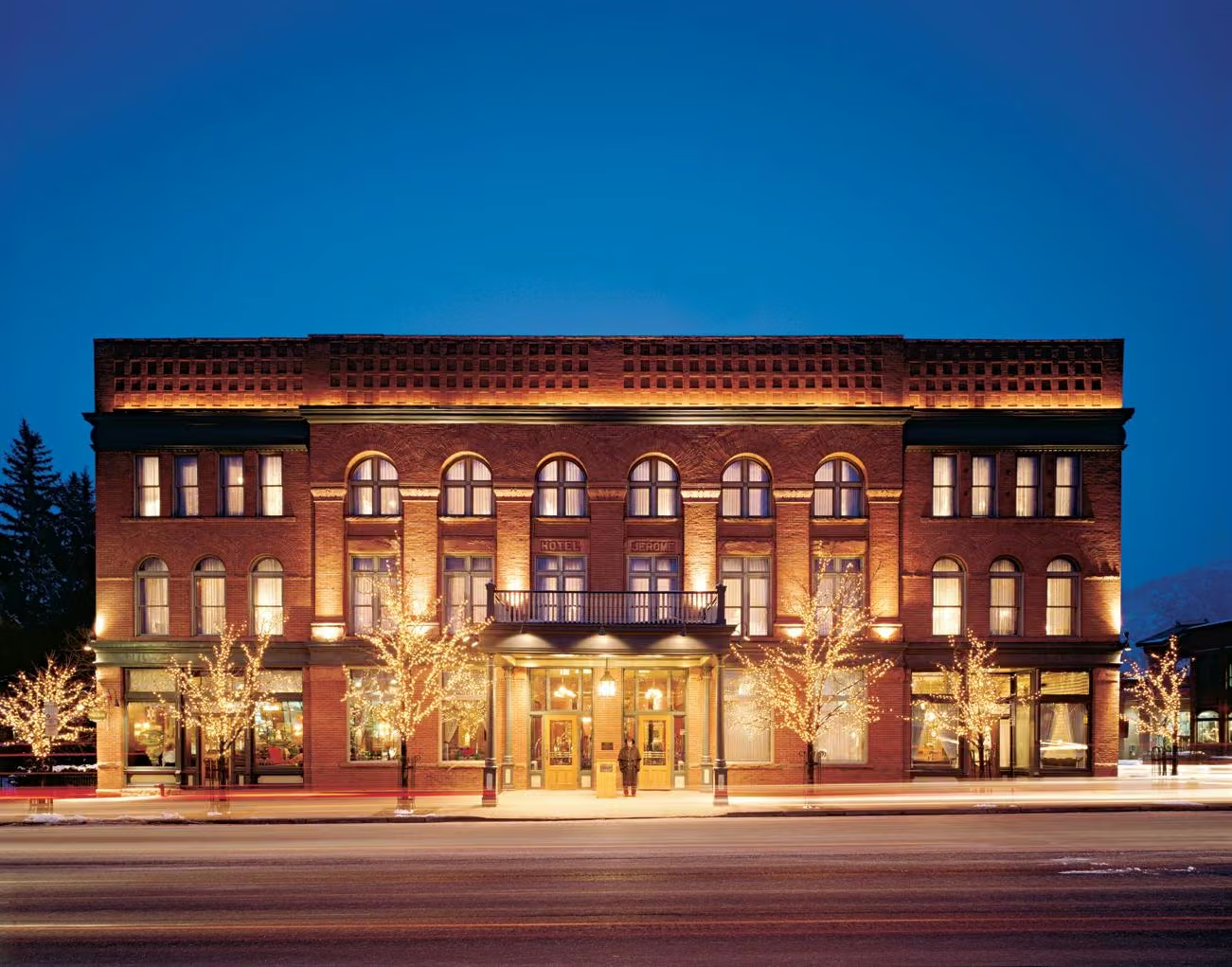
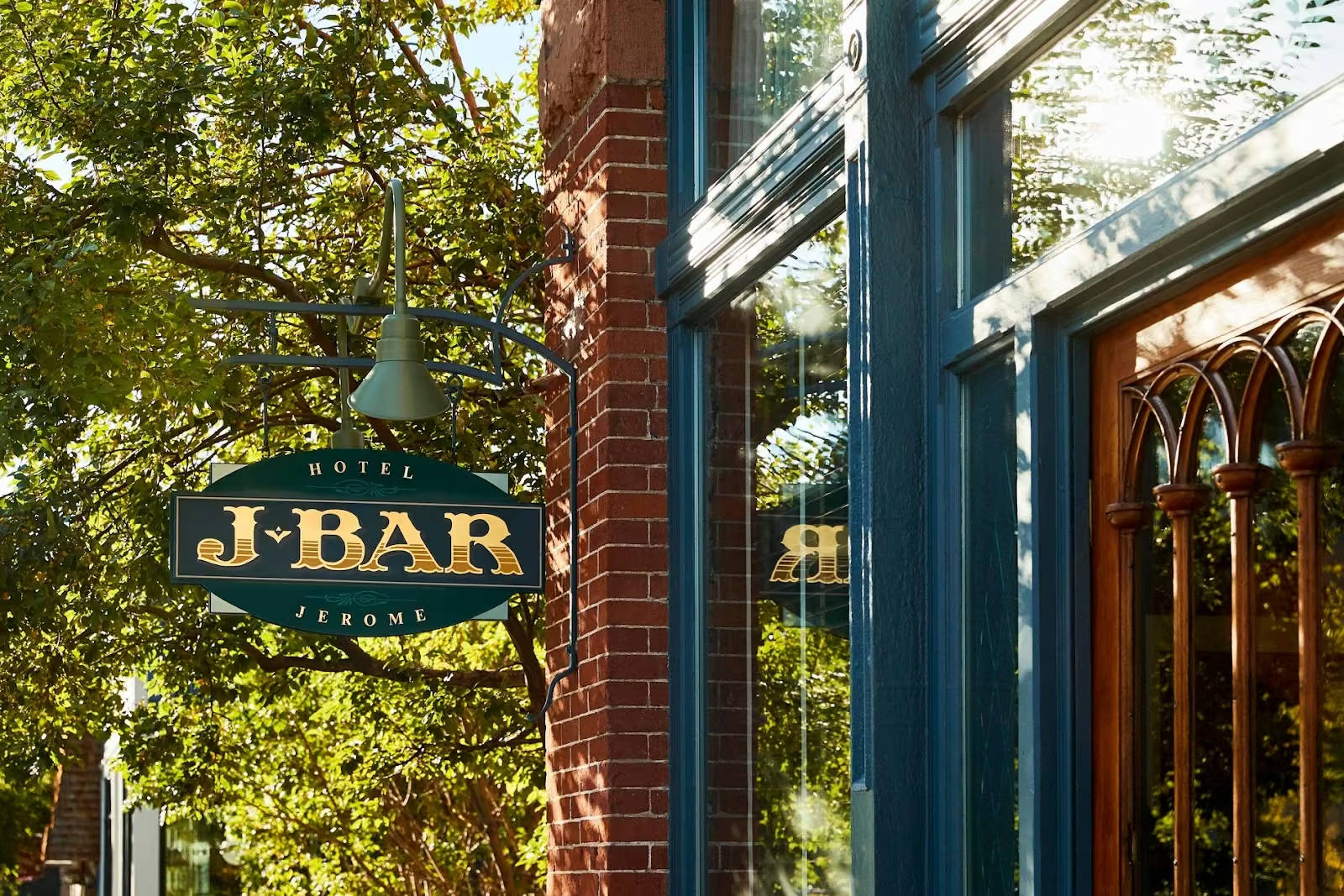
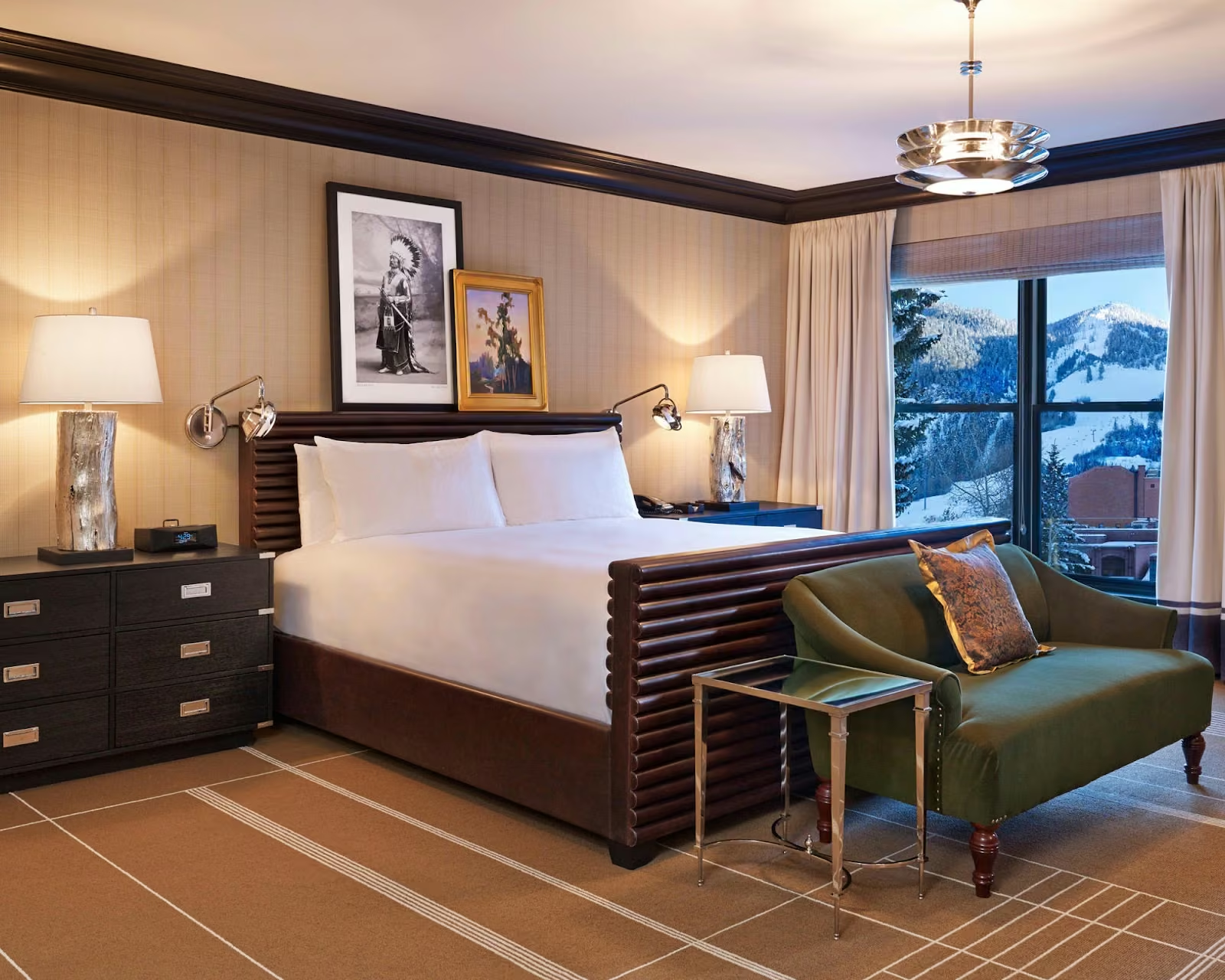
Macy's co-owner Jerome B. Wheeler opened this Victorian brick landmark in 1889 wanting an Aspen hotel to rival Claridge's, and it was among the first buildings west of the Mississippi with full electric lighting. It stayed open as the town's only hotel through the quiet years after the silver crash. The J-Bar invented the Aspen Crud under Prohibition, Tenth Mountain Division skiers adopted it, and Hunter S. Thompson treated the bar as his office until his memorial filled the ballroom.
- 99 rooms
- Opened 1889
- Neighborhood: Downtown
- Rooms from 525 sq ft (49 m²)
- Architect: Jamie Koval
About Hotel Jerome
- Aspen's only above-ground ballroom sits in the hotel, with 16-foot ceilings and 3,450 square feet of floor.
- Mansor Elisha, a Syrian American travelling drummer turned bartender, acquired the hotel around 1911 and kept it alive as a family business.
- Gary Cooper and John Wayne were postwar regulars; the Jerome was known as a place where celebrities and locals mingled freely.
- Glenn Frey drew on nights at the J-Bar with The Eagles when writing about the room.
- Listed on the National Register of Historic Places in 1986; Michelin One Key in 2025.
History
Jerome B. Wheeler arrived in Aspen in 1883 while vacationing in Colorado, found himself captivated by the silver-mining boomtown the Roaring Fork Valley had produced, and committed himself to its future with the thoroughness of a man accustomed to large investments. Wheeler was at the time co-owner of R.H. Macy and Company, and he brought to Aspen the same conviction about the relationship between refined commercial infrastructure and civic ambition that had built Macy's into a New York institution. He invested in mining claims, commissioned the Wheeler Opera House, and in 1888 began planning a hotel that would give the mining camp a standard of accommodation equal to the great European hotels he admired — Claridge's in London, the George V in Paris.
The Hotel Jerome was designed by architect George W. Myers of Detroit and completed in 1889, opening on the evening before Thanksgiving with guests who had traveled from as far as Paris for the occasion. It was one of the first buildings west of the Mississippi River to offer full electric lighting, and its amenities — running water, indoor plumbing, steam heat, an elevator, and 90 guest rooms — were unprecedented for a mountain town. The red brick exterior, trimmed in peachblow sandstone quarried fifty miles away in the Frying Pan River Valley, presented a three-story facade of unmistakable urban ambition on Main Street at Mill Street, the commanding intersection of a city that briefly threatened to become one of the great metropolises of the American West.
The collapse of silver prices following the repeal of the Sherman Silver Purchase Act in 1893 ended Aspen's boom years and began what later generations called the quiet years — decades when the town's population drained from thousands to hundreds and the Jerome remained open as the city's only hotel, often functioning as a boardinghouse. Ownership passed to Mansor Elisha, a Syrian American drummer who had stopped in Aspen on a touring band's circuit and never left, acquiring the hotel from a bankrupt Wheeler around 1911. The Elishas ran the Jerome as a family business through the Depression and the war, preserving the building when Aspen's other Victorian structures were falling to decay and neglect.
Walter Paepcke, the Chicago industrialist who saw in Aspen the makings of a cultural and intellectual resort, leased the Jerome in the mid-1940s and commissioned the Austrian Bauhaus architect Herbert Bayer to renovate it, an intervention that unfortunately painted over the original brick in grey. The hotel became the social center of the early Aspen Institute and ski resort era, its poolside and lobby hosting Gary Cooper, Lana Turner, John Wayne, and the intellectual circle Paepcke assembled for the Aspen Ideas Festival's predecessor programs.
A 1985 restoration by a group of investors led by local developer Dick Butera spent more than four times the purchase price stripping the Bayer paint to reveal the original brick, restoring all the Victorian interior finishes, and returning the Jerome to something like its 1889 appearance. The hotel was listed on the National Register of Historic Places in 1986. Auberge Resorts took over management in 2012 and undertook a further forty-million-dollar restoration — later supplemented by work on the adjacent Aspen Times Building, converted into the Bad Harriet speakeasy and additional suites — that the architectural firm Rowland + Broughton led. The J-Bar, serving the celebrated Aspen Crud cocktail since Prohibition, and the Prospect restaurant continue as the hotel's social anchors. Hunter S. Thompson used the Jerome as his de facto office for years; Johnny Depp held Thompson's memorial service here in 2005. The building that Jerome Wheeler built to rival the Ritz is still the crown jewel of Aspen's Main Street, and still the most historically layered address in the American mountain West.
The setting
Hotel Jerome anchors the corner of Main Street and Mill Street in Aspen's historic downtown, a Victorian brick landmark built in 1889 by Jerome B. Wheeler — Aspen's foremost silver-era patron. Listed on the National Register of Historic Places, it was among the first buildings west of the Mississippi with full electric lighting, and remained open through every boom-and-bust cycle that shaped this mining camp into a world-renowned resort. The John Denver Sanctuary is five minutes on foot, the Aspen Art Museum eight, and the Silver Queen Gondola ten, placing ski terrain, cultural institutions, and the storied J-Bar all within a walkable radius of Aspen's most historic address.
Restaurants and bars
- Prospect — Restaurant
- Bad Harriet — Restaurant
- J-Bar — Bar
Experiences
- Epicurean Passport Weekend — Annual food and wine weekend at Hotel Jerome, now in its sixth year in 2026, with culinary icons and Top Chef guests.
- Aspen Pastry Invitational — Event held October 9-11 at the Aspen Meadows, Hotel Jerome, and The Little Nell.
- Theatre Aspen Broadway Cabaret — Annual holiday Broadway cabaret with Theatre Aspen, with a partnership with Hotel Jerome December 18-23 (2021).
- Wheeler Opera House collaboration — Year-long cultural collaboration between Hotel Jerome and Wheeler Opera House announced November 2025.
- Christmas and New Year's Eve — Carolers, cookie decorating, photos with Santa, a Christmas Day buffet, and a New Year's Eve bottomless Champagne dinner at Prospect.
- Paddleboarding — Listed under Revel in Relaxation & Adventure.
Amenities
- Spa
- Pool
- Skiing
- Hot tub
- Fitness center
- Pet-friendly
Awards
- Forbes Travel Guide Recommended (2026)
- MICHELIN One Key (2026)
- AAA Four Diamond (2025)
Open Hotel Jerome in the atlas for live weekend rates, photos, and the full folio.
More Auberge Resorts hotels
- Auberge du Soleil — Rutherford, United States · Apex Luxury
- The Lodge at Blue Sky — Wanship, United States · Apex Luxury
- Bowie House — Fort Worth, United States · Grand Luxury
- Commodore Perry Estate — Austin, United States · Grand Luxury
- Primland Resort — Meadows of Dan, United States · Grand Luxury
- Solage — Calistoga, United States · Grand Luxury
More hotels in Aspen
- The Little Nell — Independent · Grand Luxury
- MOLLIE Aspen — Independent · High Luxury
- The St. Regis Aspen Resort — St. Regis · High Luxury
- Aspen Meadows Resort — Salamander Collection · Core Luxury
- Limelight Hotel Aspen — Limelight · Core Luxury
- W Aspen — W Hotels · Core Luxury
Auberge Resorts in The Maison: the brand's idea, history and every house on the atlas.